
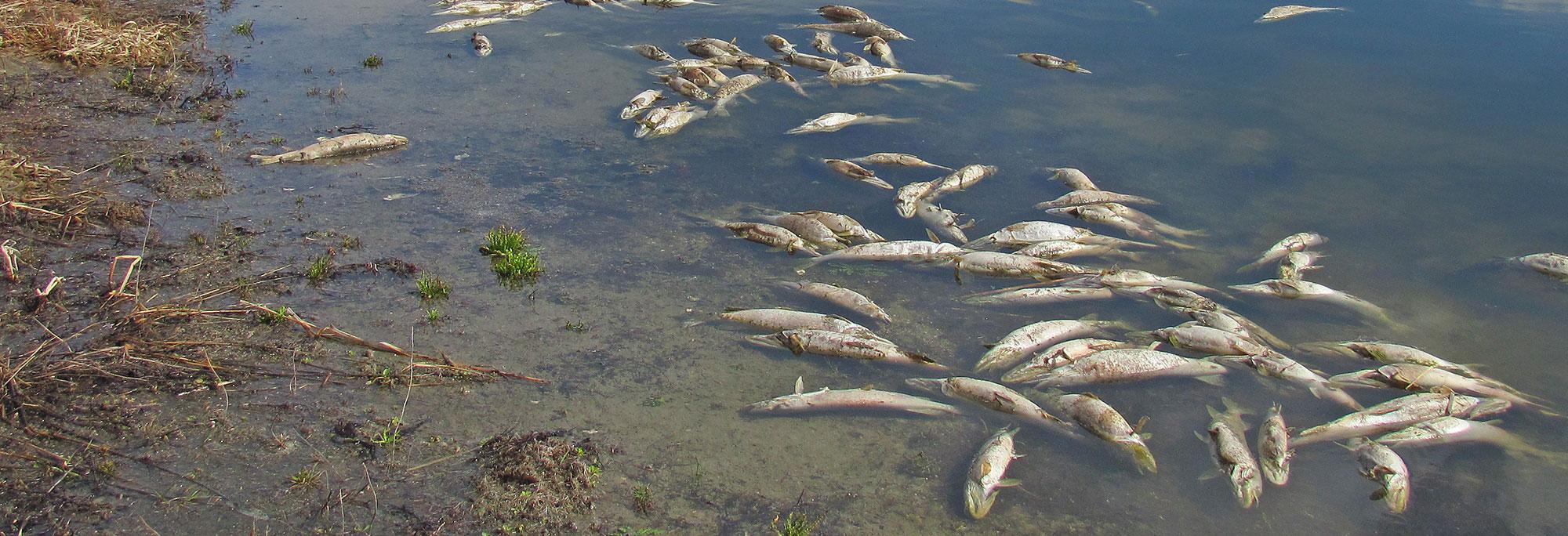

Winter Fish Kills
Winter fish kills are typically caused by a depletion of dissolved oxygen. These occur most frequently in shallow, nutrient-rich ponds that experience significant aquatic plant and algae growth. Heavy snow cover on ice can prevent sunlight from penetrating the water, inhibiting photosynthesis and oxygen production. This situation is worsened by natural bacteria that decompose organic matter, further consuming oxygen. Without aeration, photosynthesis is the sole means of oxygen production in ice-covered ponds. The more organic material present, the faster oxygen levels decline, leading to fish stress or death. Fish that perish in winter are often only discovered after ice-out. Drilling holes in the ice to introduce oxygen is NOT an effective solution.
How to Prevent Winter Fish Kills
Preventing winter fish kills involves maintaining adequate oxygen levels in the pond throughout the year. Here are some effective strategies:
-
Aeration: Installing a deicer or aerator allows oxygen and sunlight to reach the aquatic environment, significantly reducing the risk of winter kills.
-
Summer Aeration: Oxygenation during the summer months improves the breakdown of organic matter, reducing the buildup of decaying material in winter.
-
Beneficial Bacteria: Adding beneficial pond bacteria in summer helps decompose leaf litter and other organic debris before it becomes an issue. Naturalake's Beneficial Bacteria Line is specifically designed to target ponds at certain temperatures.
-
Snow Removal: Manually clearing at least 30% of the pond's surface snow can allow sufficient sunlight penetration. However, always ensure the ice is safe before removing snow, as personal safety is paramount.

How to Recover from a Fish Kill
If your pond has experienced a fish kill, there are several steps you can take to restore its ecosystem and prevent future occurrences:
-
Remove Dead Fish – Promptly remove any dead fish to prevent decomposition, which can further deplete oxygen and contribute to poor water quality.
-
Test Water Quality – Assess oxygen levels, pH, ammonia, and other water parameters to determine if any imbalances need correction.
-
Enhance Aeration – Consider installing an aeration system to ensure proper oxygen levels year-round.
-
Introduce Beneficial Bacteria – Adding bacteria can help break down organic debris and improve water clarity.
-
Pro Tip: If you're using a treatment like Nature's Blend, start as soon as water temperatures begin to rise in the spring. Early intervention is key to keeping your pond's ecosystem balanced after a rough winter.
-
-
Restock Fish – If necessary, consult with a local fisheries expert to determine the best species and stocking rates for your pond.
-
Monitor Aquatic Vegetation – Managing plant and algae growth can prevent excessive organic matter buildup, which contributes to oxygen depletion.
-
Regular Maintenance – Establish a routine for monitoring water quality, removing debris, and maintaining aeration to prevent future fish kills.
Will a Fish Community Recover from a Winter Kill?
In large lakes, winter kills are rarely devastating since thousands of fish per acre can help replenish the population. Surviving fish from the lake or connected waters usually repopulate the area naturally. In some cases, fish kills may even benefit the ecosystem by reducing overpopulated and slow-growing species.
However, in small, privately owned ponds, a severe fish kill can eliminate the entire fish population. In such cases, restocking may be necessary. If you experience a complete loss of fish in your pond, you can contact us for a pond evaluation and restocking rates.
2 comments
rochelle sullivan
every other year my grass carp are dying
is there something I can put in my pond to decrease the chance of this happening? I am unable to clear it off from the snow and it has no power to it so aeration is not an option. Please help.
Darrel
Can you tell me what to use as a beneficial bacteria? Ty