
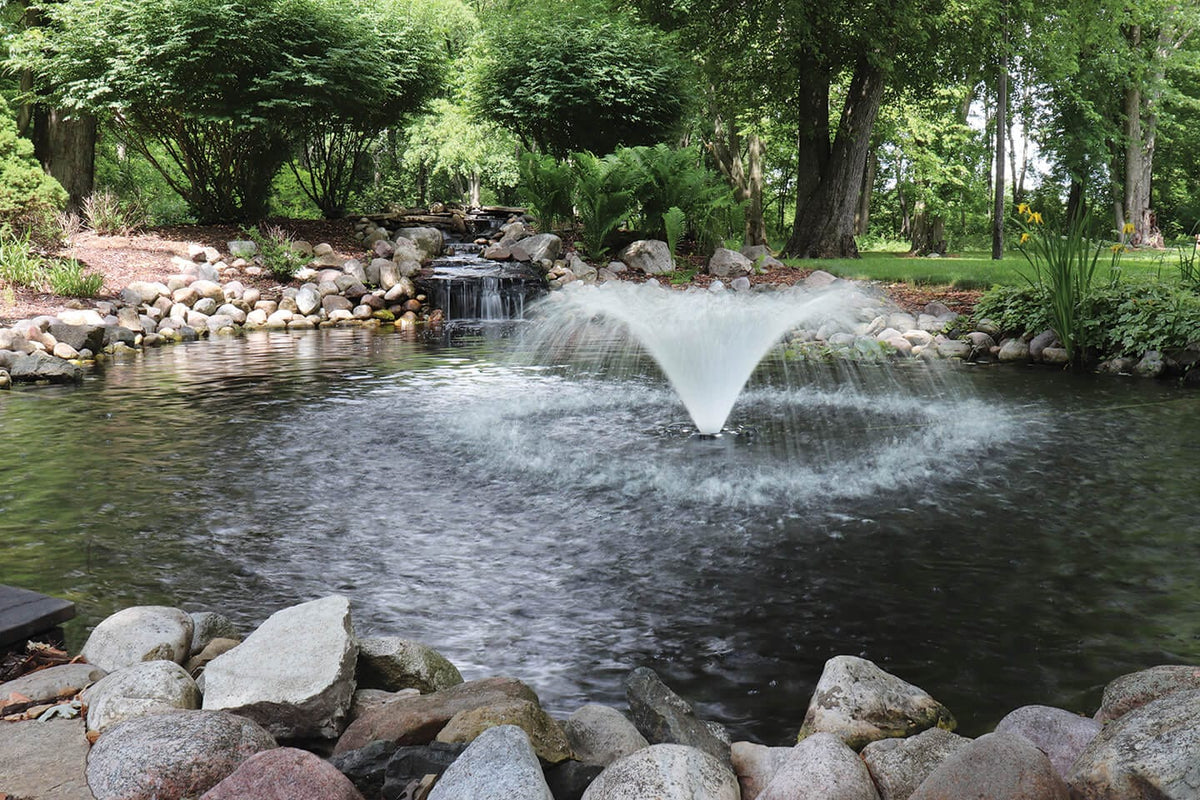
How Pond Fountains Work
A Fountain Can Transform Your Pond
There is no denying the appeal of a fountain. The sight of a towering spray and the soothing sound of falling water can turn a simple pond into the centerpiece of a landscape.
But at Smith Creek Fish Farm, we know that a fountain is more than just a decorative feature.
A properly selected fountain can help support surface circulation, oxygen exchange, and overall pond management.
Let's explore how fountains work and what they can do for your pond.
Atmospheric Oxygenation
Unlike a diffused aeration system that releases air beneath the surface, a fountain pumps pond water into the atmosphere.
The Splash Effect
As water sprays into the air, it breaks into droplets and creates additional contact between the water and atmosphere.
This interaction encourages oxygen transfer, particularly when the water returns to the pond and disturbs the surface.
Fish, beneficial bacteria, and other aquatic organisms depend on dissolved oxygen. Fountains can help support oxygen levels in the upper portion of the pond.
The amount of oxygen transferred depends on the fountain's design, pumping capacity, spray pattern, and pond conditions.
Surface Agitation & Circulation
Still water allows floating debris, pollen, duckweed, and other materials to accumulate in sheltered areas of a pond.
A fountain creates continuous ripples and surface movement, helping circulate water through the surrounding area.
What About Mosquitoes?
Mosquitoes generally prefer calm water for laying eggs. The movement created by a fountain can make the immediate area less suitable for mosquito breeding.
Does a Fountain Control Pond Scum?
Surface circulation can help redistribute floating debris and reduce localized stagnation.
However, fountains do not remove excess nutrients or eliminate established algae, duckweed, or watermeal infestations.
For ponds experiencing recurring algae or surface weed problems, combining circulation with nutrient management and appropriate pond treatments is often more effective than relying on a fountain alone.
The Cooling Effect
During hot summer weather, surface water temperatures can rise significantly.
As fountain water travels through the air, evaporation and heat exchange can sometimes help dissipate heat from the sprayed water.
However, the overall cooling effect depends on air temperature, humidity, wind, and water temperature.
Warm water naturally holds less dissolved oxygen than cool water. During summer, maintaining adequate oxygen can be especially important in ponds with fish populations and heavy organic loads.
Fountain or Diffused Aeration?
Both systems can play an important role in pond management, but they accomplish different things.
Decorative & Aerating Fountains
Fountains are an excellent choice when appearance and surface movement are important priorities.
They are often particularly useful for shallow ponds, water gardens, entrance ponds, and highly visible landscape features.
Not all decorative fountains provide the same level of aeration. Spray design and water movement matter.
Diffused Aeration Systems
Diffused aeration systems use an air compressor and underwater diffusers to release bubbles near the bottom of a pond.
As the bubbles rise, they help move water upward, promoting circulation through deeper portions of the water column.
This makes diffused aeration especially valuable in deeper ponds where a fountain may have limited influence below the surface.
Why Not Have Both?
For many larger or deeper ponds, a combination of fountain and diffused aeration can provide both visual appeal and more complete water circulation.
The fountain provides the display.
The aeration system supports deeper circulation.
A Nighttime Transformation
A fountain doesn't have to disappear when the sun goes down.
Many professional fountain systems can be equipped with LED lighting kits that illuminate the spray pattern and create beautiful reflections across the water.
With appropriate lighting and controls, your pond can become a stunning landscape feature well into the evening.
Choosing the Right Fountain for Your Pond
When selecting a fountain, consider more than just the spray height or appearance.
Pond Size
The surface area of your pond helps determine the appropriate fountain size and pumping capacity.
Water Depth
Shallow ponds may benefit from fountain circulation, while deeper ponds may need additional bottom aeration.
Spray Pattern
Different nozzle designs create different water displays. Some emphasize tall, dramatic sprays while others create wider patterns.
Aeration Goals
If improving oxygen transfer is a priority, choose equipment designed for aeration rather than appearance alone.
Maintenance & Seasonal Use
Consider installation, electrical requirements, cleaning, winter removal, and storage when selecting your system.
Frequently Asked Questions
Do pond fountains add oxygen to water?
Yes. Fountains can support oxygen transfer through water spray and surface agitation. The effectiveness varies by design and operating conditions.
Will a fountain prevent algae?
A fountain may help improve circulation, but it will not eliminate the nutrients that support algae growth. Additional pond management practices may be necessary.
Can a fountain replace an aerator?
In some shallow ponds, an appropriately sized aerating fountain may provide sufficient circulation. Deeper ponds often benefit from diffused aeration.
Do fountains help with mosquitoes?
Surface movement can discourage mosquito breeding near the fountain, although sheltered and stagnant areas may still provide breeding habitat.
Can I add lights to my fountain?
Many fountain models support compatible LED lighting kits, allowing the water display to remain visible after dark.
More Than a Fountain.
A Better Pond Experience.
Whether you're looking for a beautiful water display, improved circulation, or a complete pond aeration system, Smith Creek Fish Farm can help you choose the right equipment.
Shop Pond Fountains → Explore Pond Aeration →
Fish Stocking • Pond Management • Aeration
Fountains • Pond Treatments • Pond Supplies