
Panfish and Forage Fish Guide
Welcome to our Panfish & Forage Fish directory! These incredibly hardy and fast-producing species serve a crucial double purpose in pond management. Known both as "panfish" for their spirited, family-friendly fishing action and as "forage fish" for their vital role in the aquatic food chain, they are the absolute backbone of a healthy, balanced pond.
Whether you are looking to establish an abundant food source for predatory Largemouth Bass or want to stock a pond that is perfect for teaching kids how to fish, these active species are a must-have for your aquatic ecosystem.
Ready to stock your pond? Check our current weekly availability list, then stop by the hatchery to pick up your fish!
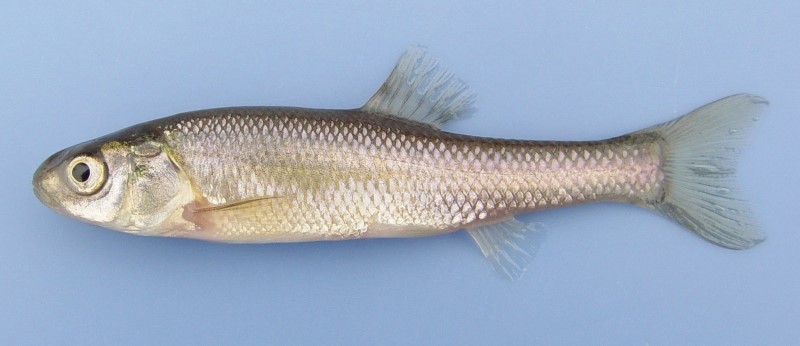
Fathead Minnow(Pimephales promelas)
|
Fathead Minnows are the golden standard for starting a new pond. They are incredibly hardy, highly social, and tolerate a massive range of water temperatures and quality. Identification: They are small, dull olive-grey fish with a dark stripe running along their sides. During the breeding season, males develop a darkened, swollen "fat head" and small breeding bumps (tubercles) on their snout.
|
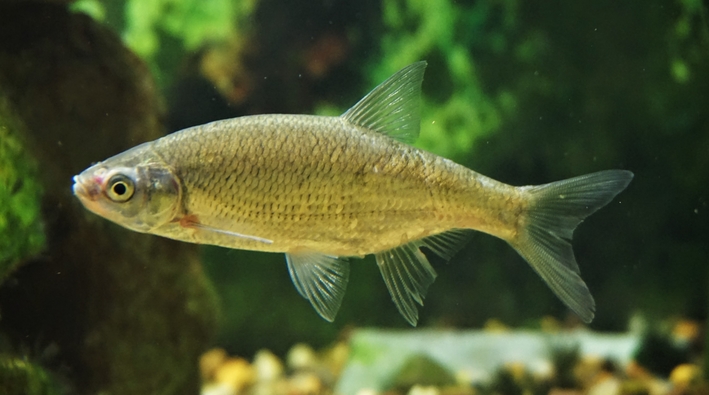
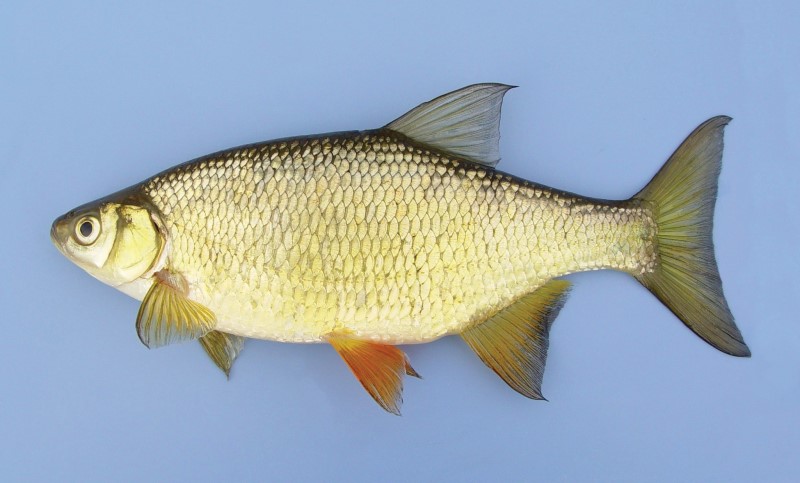
Golden Shiner(Notemigonus crysoleucas)
|
If your goal is to grow trophy-sized Largemouth Bass, Golden Shiners are your secret weapon. They grow much larger than fathead minnows, providing the heavy-duty, high-calorie meals that large predators need to put on serious weight. Identification: They have deep, compressed bodies with a distinctly curved lateral line and gorgeous, reflective gold-to-brass scales (though younger fish are often silver).
|
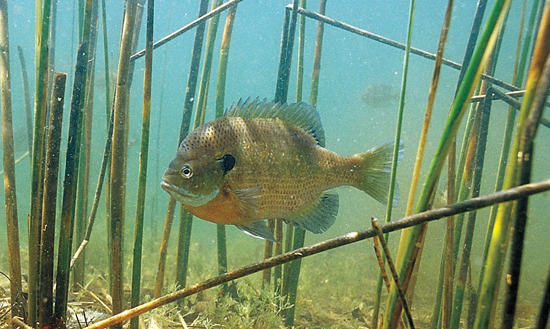
Bluegill(Lepomis macrochirus)
|
The Bluegill is the most famous and recognizable panfish in North America. They are exceptionally hardy, incredibly fun to catch on light tackle, and serve as the absolute foundation of a healthy bass pond due to their rapid reproduction rates. Identification: They have a deep, compressed, slab-sided body. Look for a dark blue-black spot on the ear flap (operculum), a dark blotch at the back base of their top fin, and faint dark vertical bars running down their sides.
|
Pumpkinseed(Lepomis gibbosus)
|
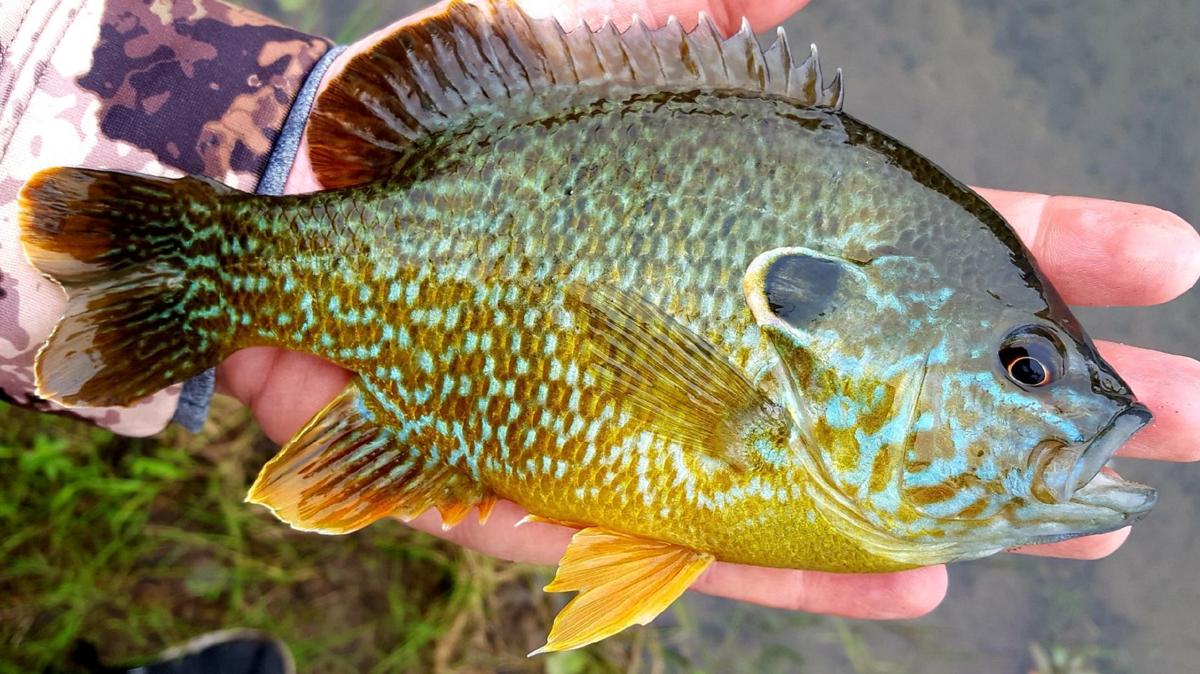
Pumpkinseeds are incredibly vibrant, colorful panfish that occupy a similar niche to Bluegills. They are famous for their eager biting—making them a huge hit for kids and beginners—and their unique ability to naturally control pest populations in your pond. Identification: Often called "sunnies," they are highly reflective with emerald, gold, and blue spots. You can easily tell them apart from Bluegills by the distinctive bright orange-to-red spot on the tip of their black ear flap and the wavy blue stripes on their cheeks.
|
Crayfish(Family Cambaridae)
|
Crayfish are incredibly valuable additions to any pond ecosystem. While they aren't biologically fish, they are a premier forage species. They pull double duty as tireless nighttime cleaning crews and as a high-calcium, high-protein superfood that helps your predatory game fish—especially Largemouth Bass—grow to trophy sizes. Identification: Looking like miniature freshwater lobsters, crayfish have a hard exoskeleton, a joined head and thorax, and a fan-shaped tail. Their most prominent features are their two large, powerful front claws (chelipeds) which they use for defense and grasping food.
|
Daphnia(Daphnia magna & Daphnia pulex)
|
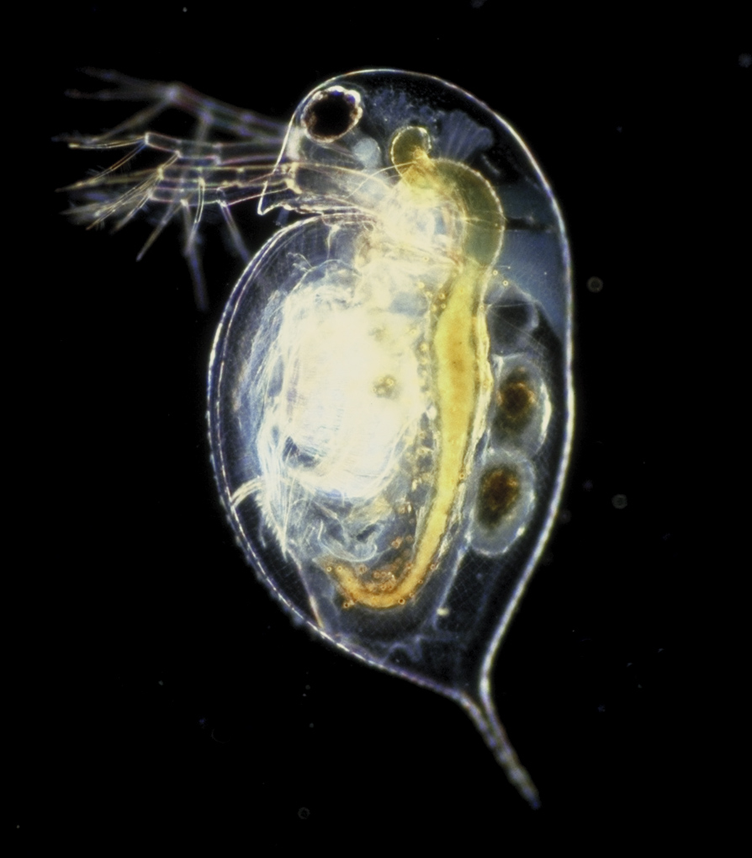
Daphnia are tiny, microscopic freshwater crustaceans that act as the unsung heroes of pond management. They serve as a highly nutritious, live food source for developing fish fry while simultaneously acting as microscopic "water purifiers" that consume the single-celled algae responsible for murky green water Identification: They are tiny, translucent, teardrop-shaped organisms (ranging from 1 to 5 mm). They get their nickname "water fleas" from their unique, jerky "hopping" swimming motion as they move through the water column. The Microscopic Cleaning Crew: Daphnia are non-selective filter feeders. They use their tiny legs to constantly sweep water through their bodies, filtering out suspended particles as small as 2 microns. A healthy population of Daphnia can consume vast amounts of free-floating green algae, naturally clarifying murky pond water without the need for harsh chemical algaecides. The Ultimate Live Fry Food: Because of their high protein content, easy digestibility, and erratic movement, Daphnia are the absolute best starter food for newly hatched fish fry (such as baby bluegill, koi, or bass). Their jerky swimming motion triggers a predatory hunting instinct in young fish, helping them grow rapidly during their most vulnerable life stages.
|





Keeping Your Fish Healthy & Thriving
Stocking your pond is only the first step—keeping your fish happy requires a healthy underwater environment!
-
Aeration: Installing an aeration system keeps your water moving and packed with vital dissolved oxygen, which is crucial for fish survival during hot summers and freezing winters.
-
Beneficial Bacteria: Adding natural bacteria acts as an invisible clean-up crew, digesting fish waste and organic muck to keep your water crystal clear and free of harmful ammonia.
Providing a clean, oxygen-rich environment is the absolute best way to protect your investment and help your fish grow!