Before we can clear your pond’s overgrowth, it helps to know exactly what species we are dealing with. Different aquatic plants require highly targeted solutions, which is why our team applies custom, professional-grade treatments to safely and effectively clear your water.
Use our visual guide below to identify your pond weeds, learn what our professional treatment process looks like, and discover what to expect once your water is restored.
Floating Weeds
Duckweed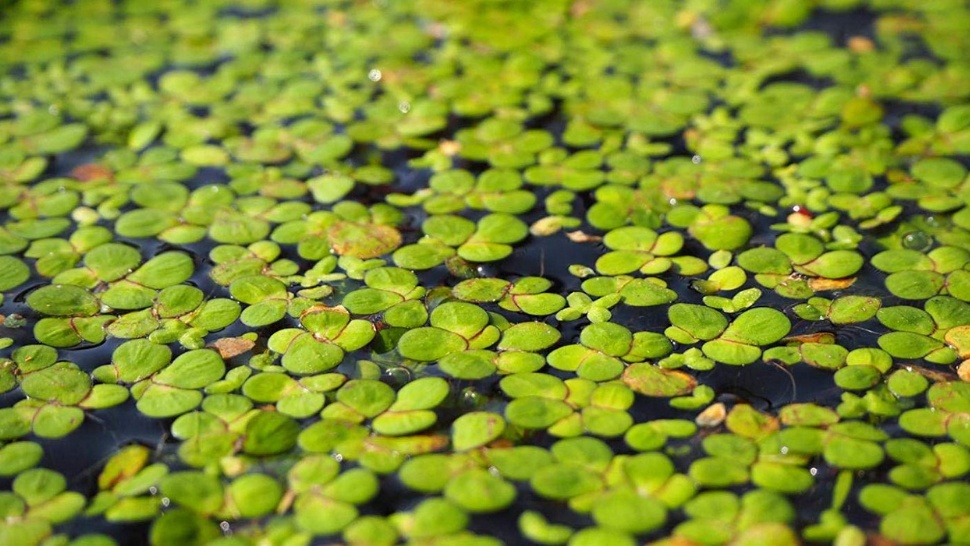
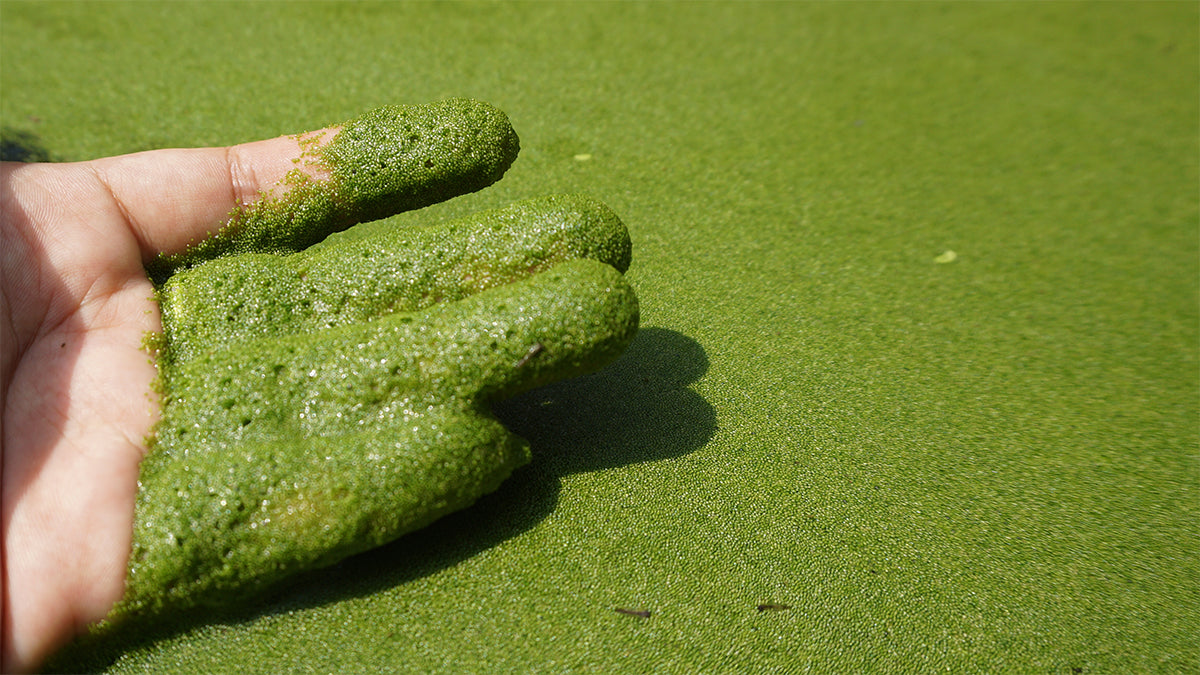
Watermeal
|
Often mistaken for algae, these are actually tiny, floating flowering plants.
-
What it looks like: Duckweed looks like tiny, vibrant green clovers (about the size of a pencil eraser) with small roots hanging underneath. Watermeal is even smaller—looking like tiny green grains of cornmeal or sand floating on the surface.
-
What to Expect after Treatment: Once treated the duckweed/watermeal will begin to yellow within 3-7 days. As these plants die off they will sink to the bottom of the pond.
|
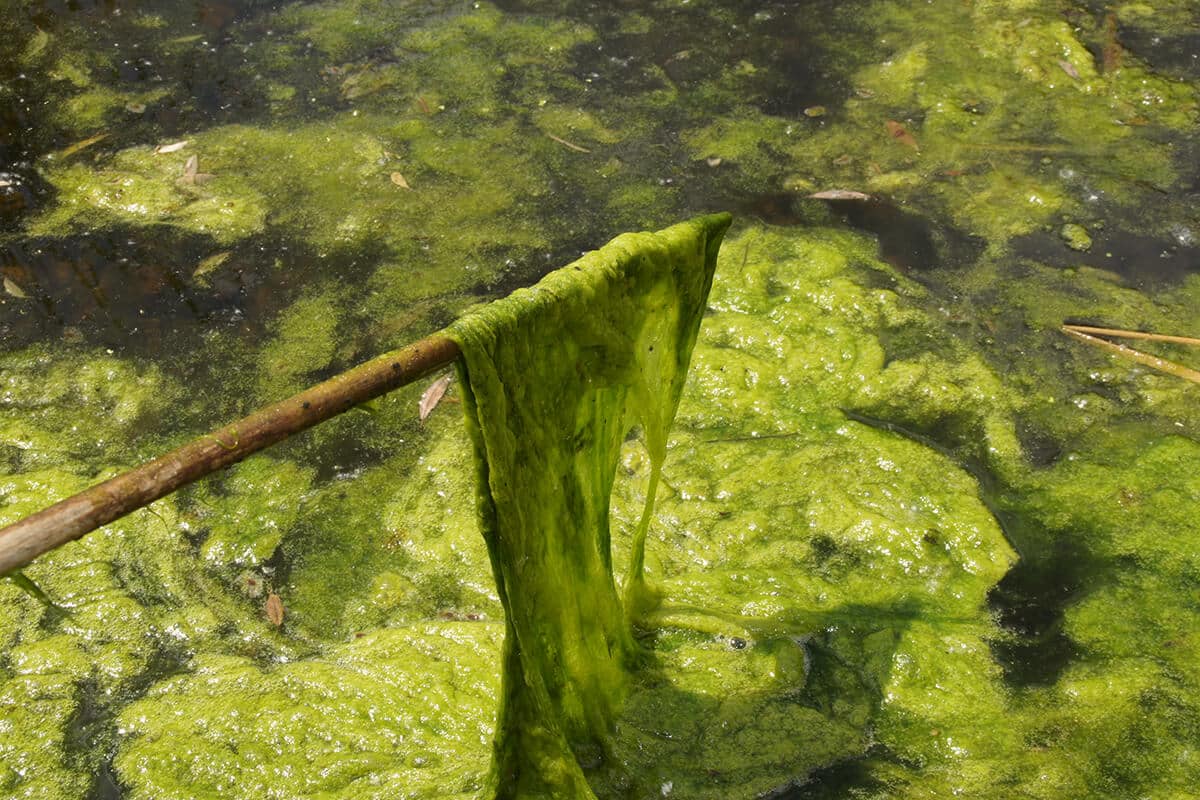
Filamentous Algae
|
-
What it looks like: Green, hair-like mats that form dense patches on the surface, often starting at the pond bottom or around rocks before floating up. It feels slimy or coarse, like wet wool.
-
What to Expect after Treatment: Within the first 24-48 hours the algae should have a dramatic change in color. Within 3-5 days after treatment the dead mats will lose their buoyancy, break apart, and sink to the bottom where natural bacteria will begin breaking them down.
|
Water Lilies

|
-
What they look like: Easily recognizable by their large, circular, flat green leaves (lily pads) that float on the water's surface, featuring a distinct "V-cut" slit. They produce fragrant, multi-petaled white or pink flowers with bright yellow centers. Unlike free-floating duckweed, water lilies are anchored to the pond floor by a massive, thick underground root system (rhizomes).
-
What to Expect after Treatment: This is a gradual process. You will begin to see the floating lily pads curl at the edges, turn yellow, and then brown over 10 to 14 days. Complete root death and browning takes 3 to 4 weeks. Once the leaves turn brown, they will begin to sink and decay. While our chemical treatments will successfully kill the root system the root rhizomes on the floor of the pond will not dissolve immediately. Some ponds take multiples years of treatment to mediate the issue.
|
Submerged Weeds
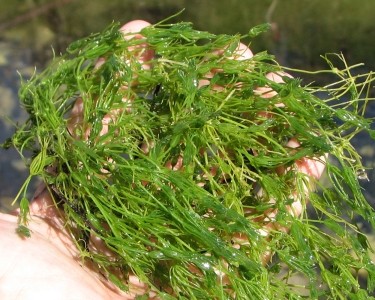
Chara
|
-
What it looks like: Though it looks like a rooted underwater plant, Chara is actually a complex form of algae. It grows in dense, carpet-like patches along the pond floor. You can easily identify it by crushing it in your hand—it will feel gritty and have a strong, distinct, musky or garlic-like odor.
-
What to Expect after Treatment: Within 7 to 14 days after treatment you will notice the Chara will yellow and become highly brittle. As it becomes brittle it will drop to the pond floor.
|
Coontail
|
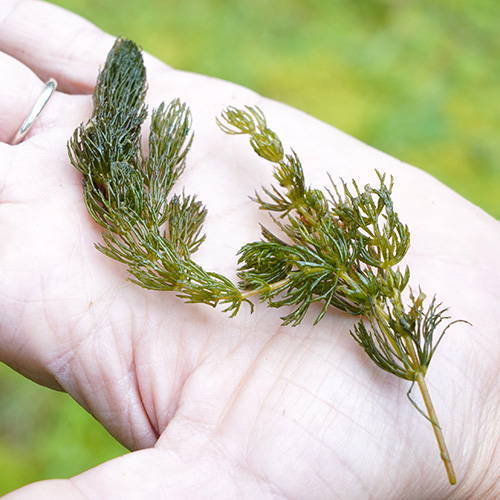
- What it looks like: An olive-green underwater plant with stiff, feathery leaves arranged in whorls around a central stem. The tips of the branches are crowded, giving them a bushy appearance that looks like a fluffy raccoon's tail.
-
What to Expect after Treatment: Within 7 to 14 days after treatment the plant will lose its rigid structure, turn limp and brown and then drop to the pond floor.
|
Emergent Weeds
Cattails
|
-
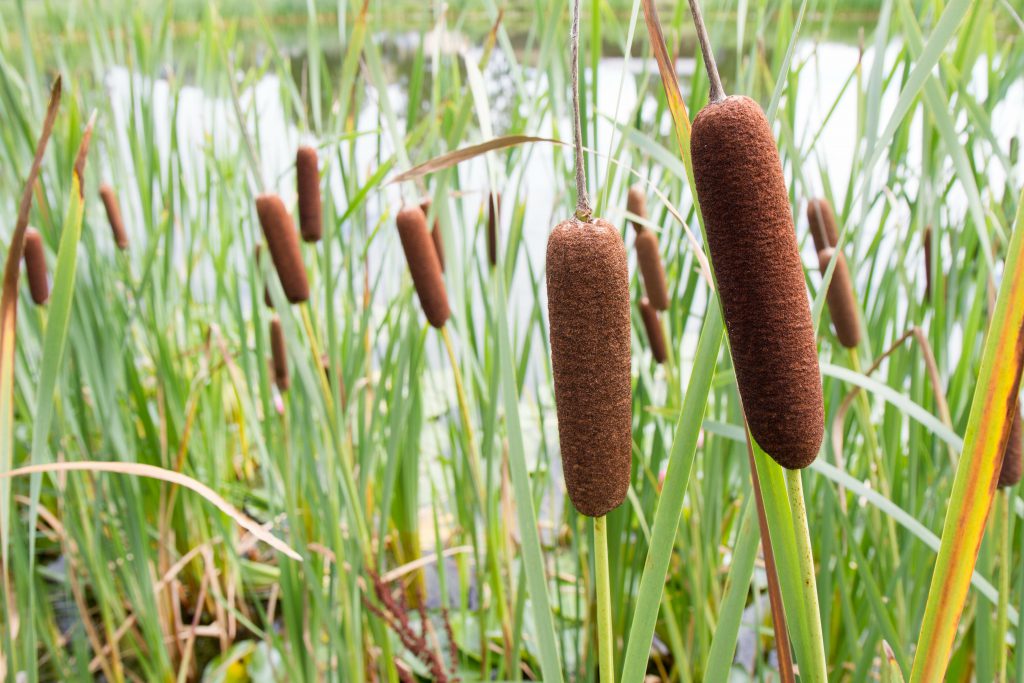
What it looks like: Tall, reed-like plants with long, flat, blade-like green leaves. They are famous for their brown, hotdog-shaped flower spikes at the top of the stalks.
-
What to Expect after Treatment:
This is a gradual process. You will see the green stalks begin to yellow in 10 to 14 days, with complete brown-out taking 3 to 4 weeks.
-
Important Note on Debris: Aquatic herbicides will kill the cattail roots so they do not return, but chemicals cannot dissolve woody, standing stalks. Once the treatment has fully taken effect and the stalks are completely brown, they will need to be physically cut or raked out to fully clear the shoreline.
|
Breakdown of Organic Material
While chemical treatments successfully kill off submerged and floating weeds, the dead plant material inevitably settles to the bottom of the pond. Although native pond bacteria will work to break down this organic debris naturally, the sheer volume of decaying waste can easily overwhelm them.
To prevent this buildup, we highly recommend supplementing your pond with beneficial bacteria throughout the season or applying a professional muck reducer. These scientifically formulated treatments are specifically designed to target, digest, and eliminate the excess nutrients and organic sludge at the bottom of your pond, keeping your water clear and healthy.