Pond & Lake Aeration Diffused
55 products
Showing 1 - 24 of 55 products
Diffused aeration systems improve dissolved oxygen levels throughout your entire pond by releasing air from the bottom and circulating water upward. This bottom-up circulation distributes oxygen more evenly, reduces stagnant areas, and supports healthier water quality. For backyard pond owners, diffused aeration is one of the most effective long-term solutions for preventing fish loss, reducing muck buildup, improving water clarity, and supporting natural nutrient processing.
Whether you manage a private fishing pond, a family recreation pond, or a residential lake, proper pond aeration helps stabilize oxygen levels, improve overall pond health, and reduce ongoing maintenance challenges caused by excess nutrients and algae growth.
Why Backyard Pond Owners Install Diffused Aeration
Most personal pond owners choose diffused aeration to help:
-
Reduce the risk of fish loss from low oxygen
-
Minimize black, smelly muck on the pond bottom
-
Improve overall water clarity
-
Reduce unpleasant odors
-
Support healthier fish growth
-
Slow long-term nutrient buildup
-
Discourage mosquito breeding by reducing stagnant water
-
Create more stable, balanced pond conditions
For many ponds, aeration becomes the foundation of a complete pond care strategy.
Aeration, Nutrient Management & Long-Term Algae Control
Algae growth is often driven by excess nutrients in the water.
Fish waste, decaying leaves, uneaten feed, and organic debris all release nutrients that accumulate over time. When oxygen levels are inconsistent, those nutrients build up and create favorable conditions for algae blooms, cloudy water, and bottom sludge.
By increasing dissolved oxygen throughout the pond, diffused aeration supports natural nutrient breakdown and promotes clearer, healthier water over time. Higher oxygen levels allow beneficial bacteria to work more efficiently, improving nutrient cycling and helping reduce the conditions that encourage persistent algae growth and stagnant areas.
Many pond owners combine diffused aeration with beneficial pond bacteria treatments or muck digestors to accelerate organic breakdown and support long-term water clarity. Together, aeration and biological support provide a more complete nutrient management approach.
Preventing Winter Fish Kills
Winter fish loss is one of the biggest concerns for private pond owners.
When ponds freeze and snow blocks sunlight, oxygen production slows dramatically while fish and decomposing organic material continue consuming oxygen. If dissolved oxygen levels fall too low, fish can suffocate under the ice.
Diffused aeration systems can be operated strategically during winter months to help maintain oxygen circulation and significantly reduce the risk of winter fish kills. Proper diffuser placement and airflow adjustment are important, especially in colder climates.
For a deeper explanation of seasonal oxygen loss and recovery, see our guide on Winter Fish Kills: Causes, Prevention and Recovery for Your Pond.
Diffused Aeration Is Especially Helpful For:
-
Ponds with recurring algae issues
-
Water bodies with visible muck buildup
-
Ponds that experience fish stress during summer heat
-
Private ponds used for fishing or recreation
-
Property owners seeking long-term water quality stability
If your primary goal is decorative spray or visible surface movement, surface aerators may be a better fit. But if you want whole-pond oxygen support, improved nutrient processing, and long-term ecosystem balance, diffused aeration is typically the stronger solution.
How Diffused Aeration Works
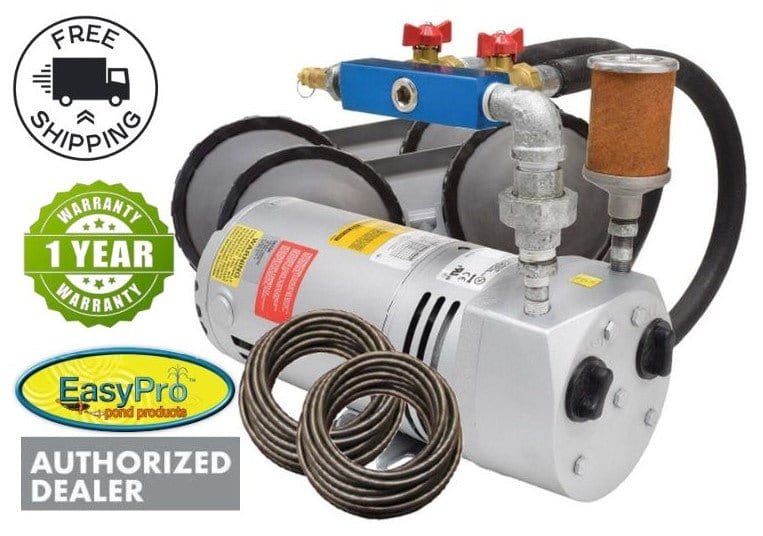
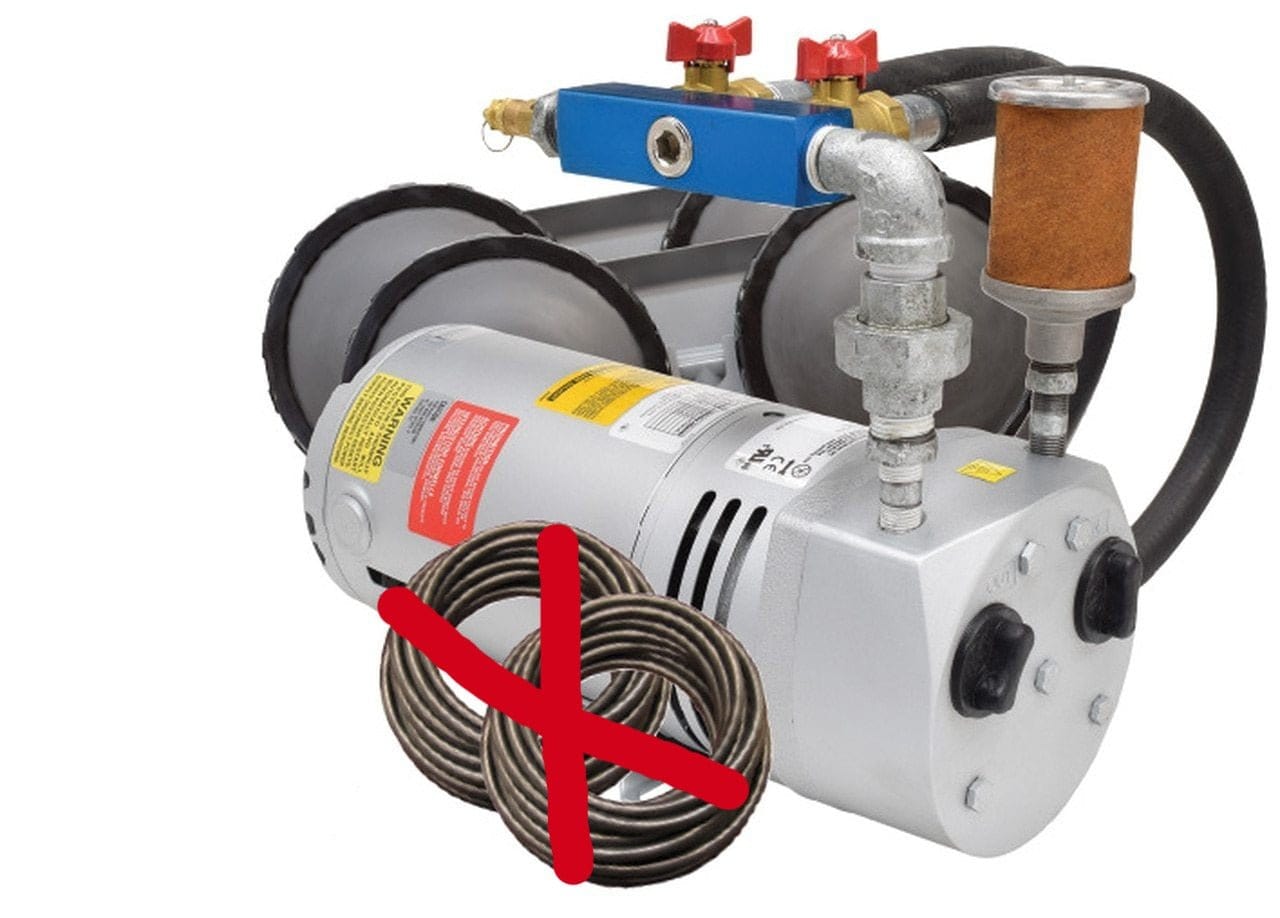
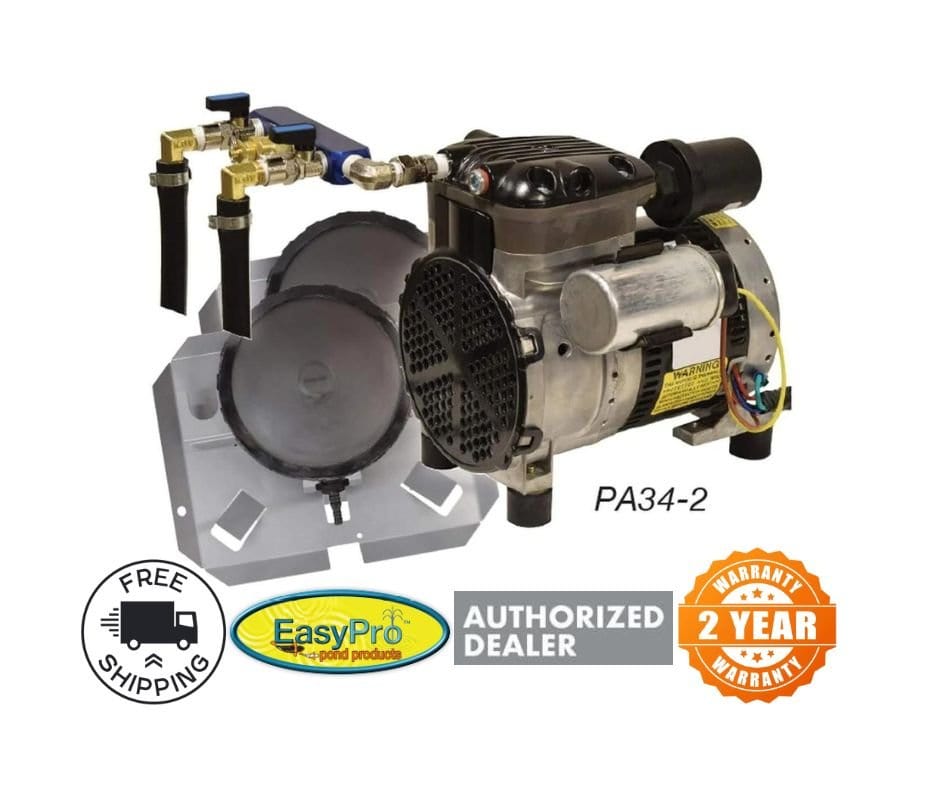
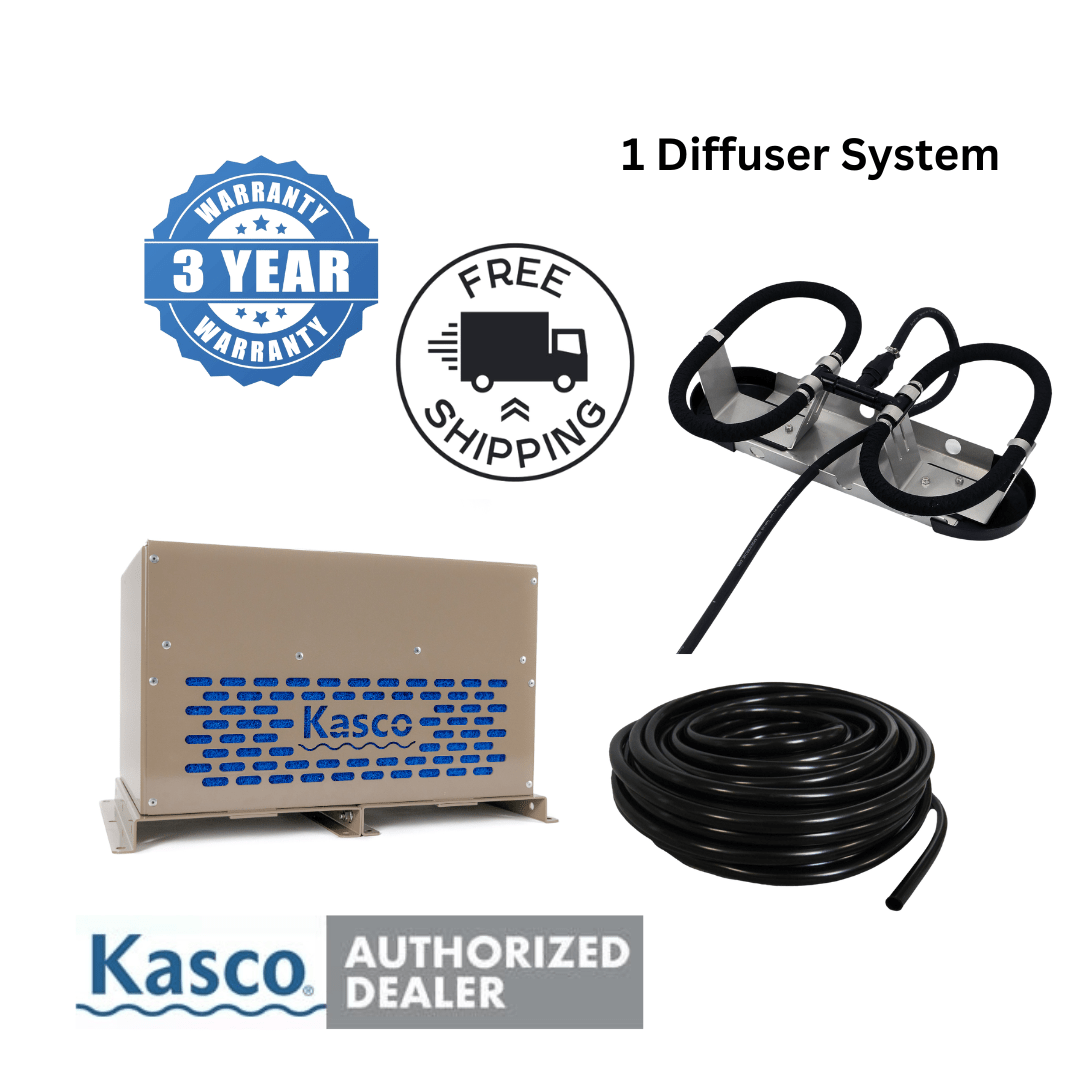
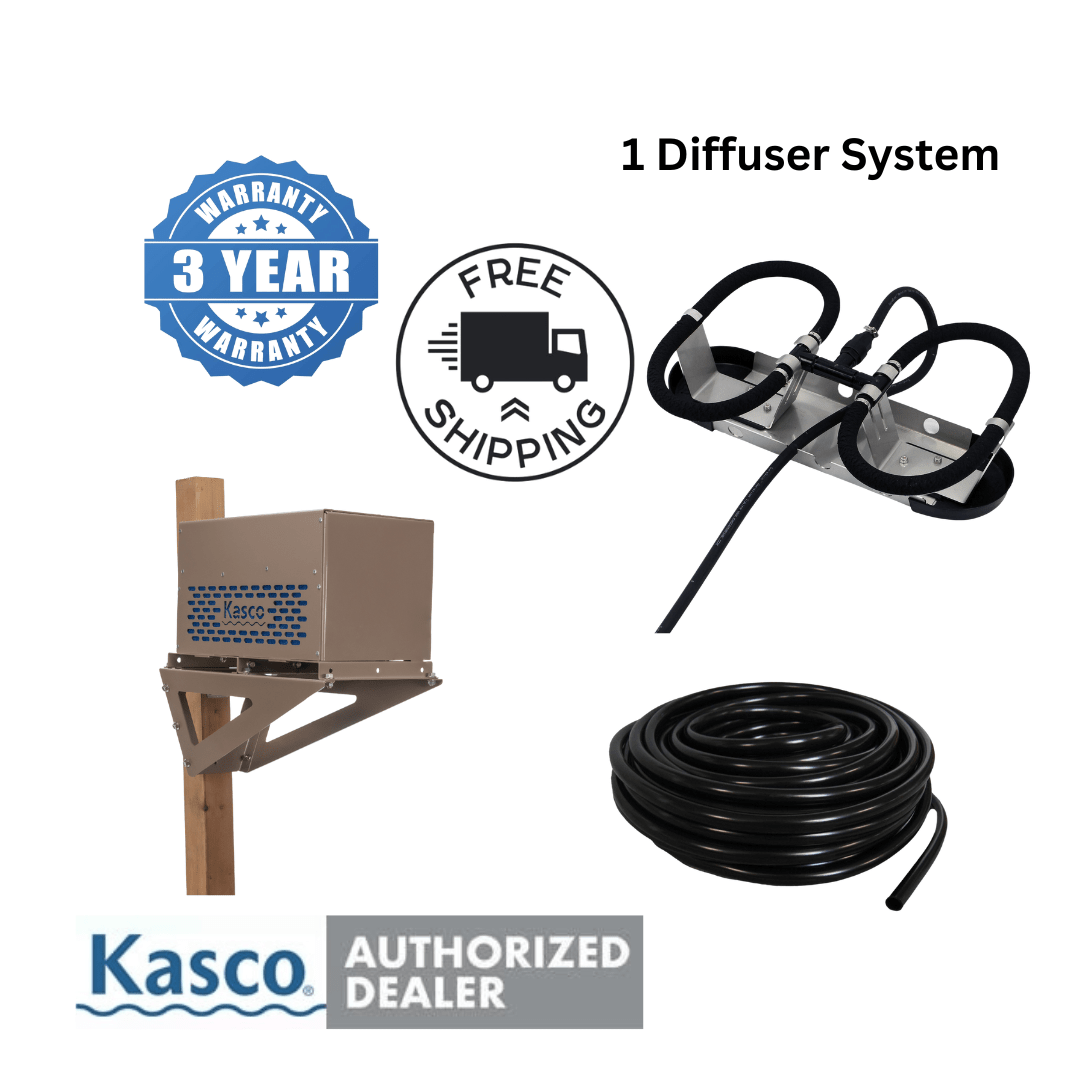
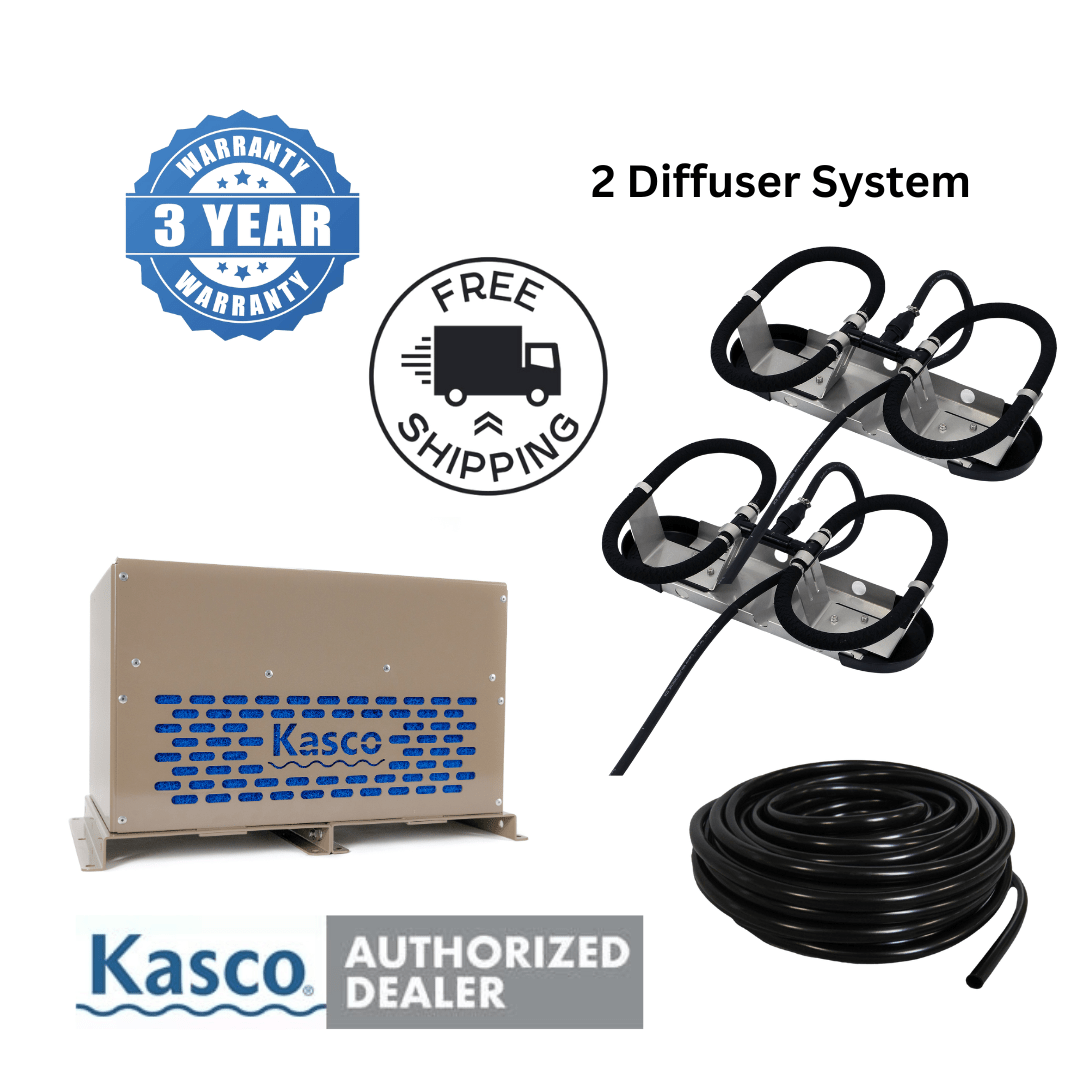
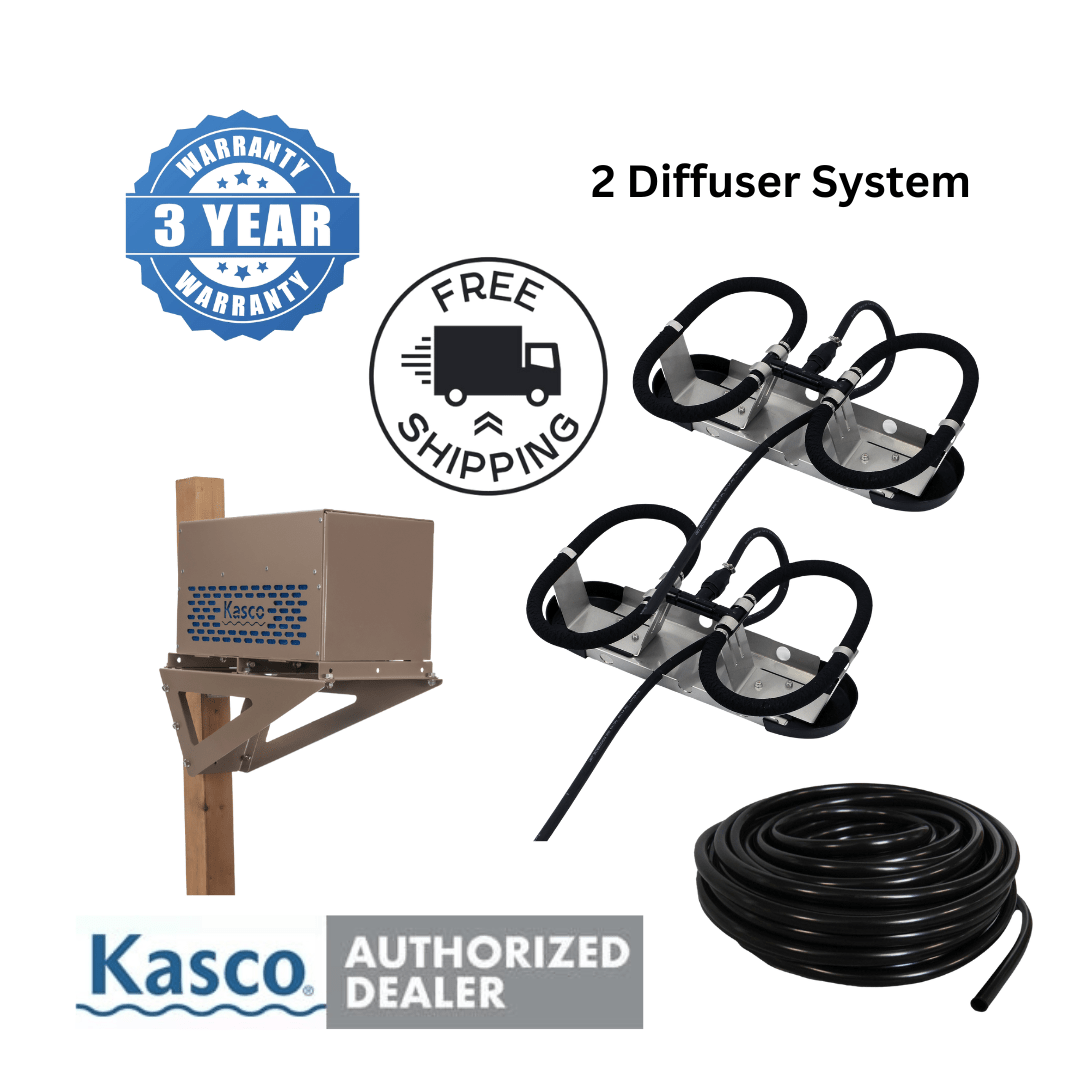
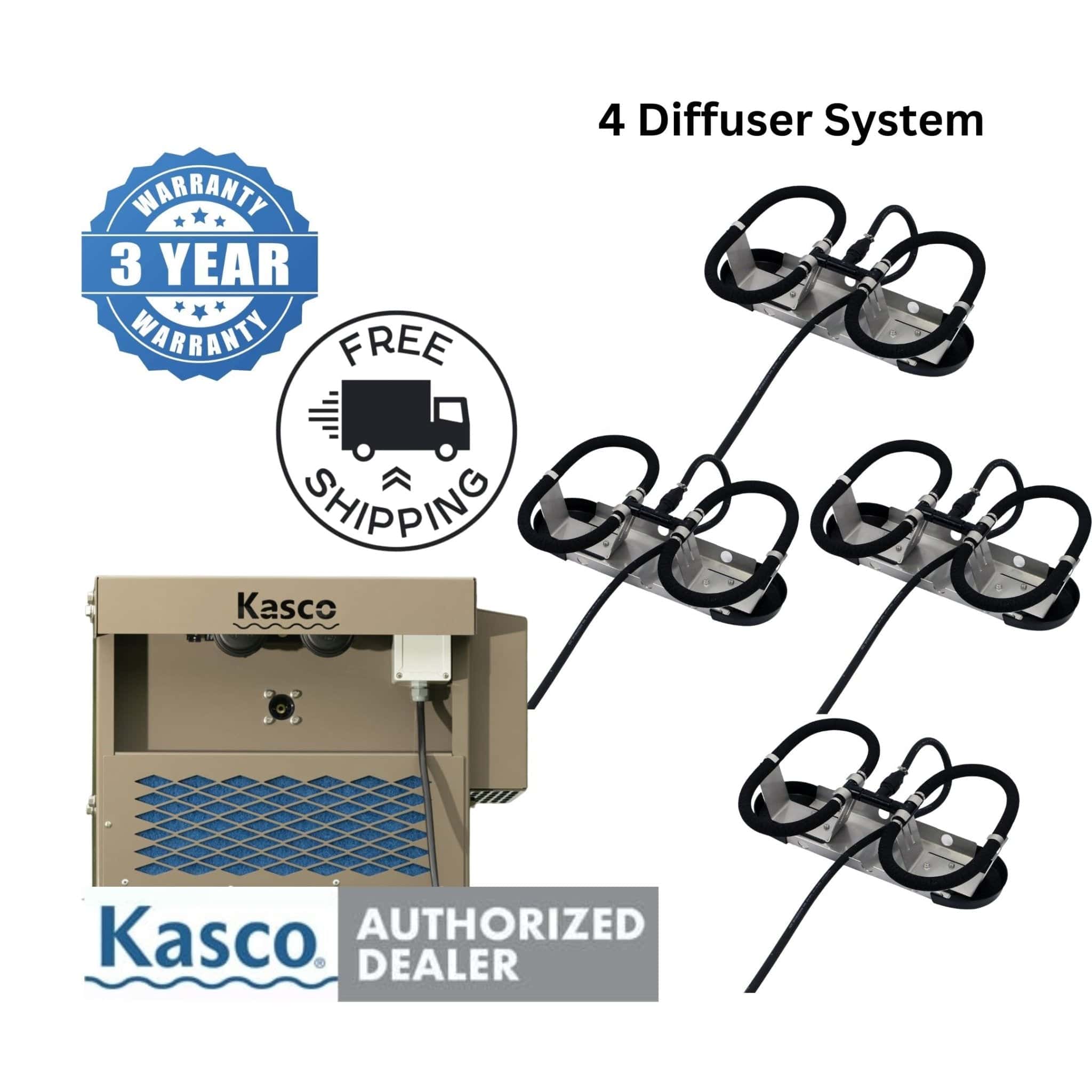
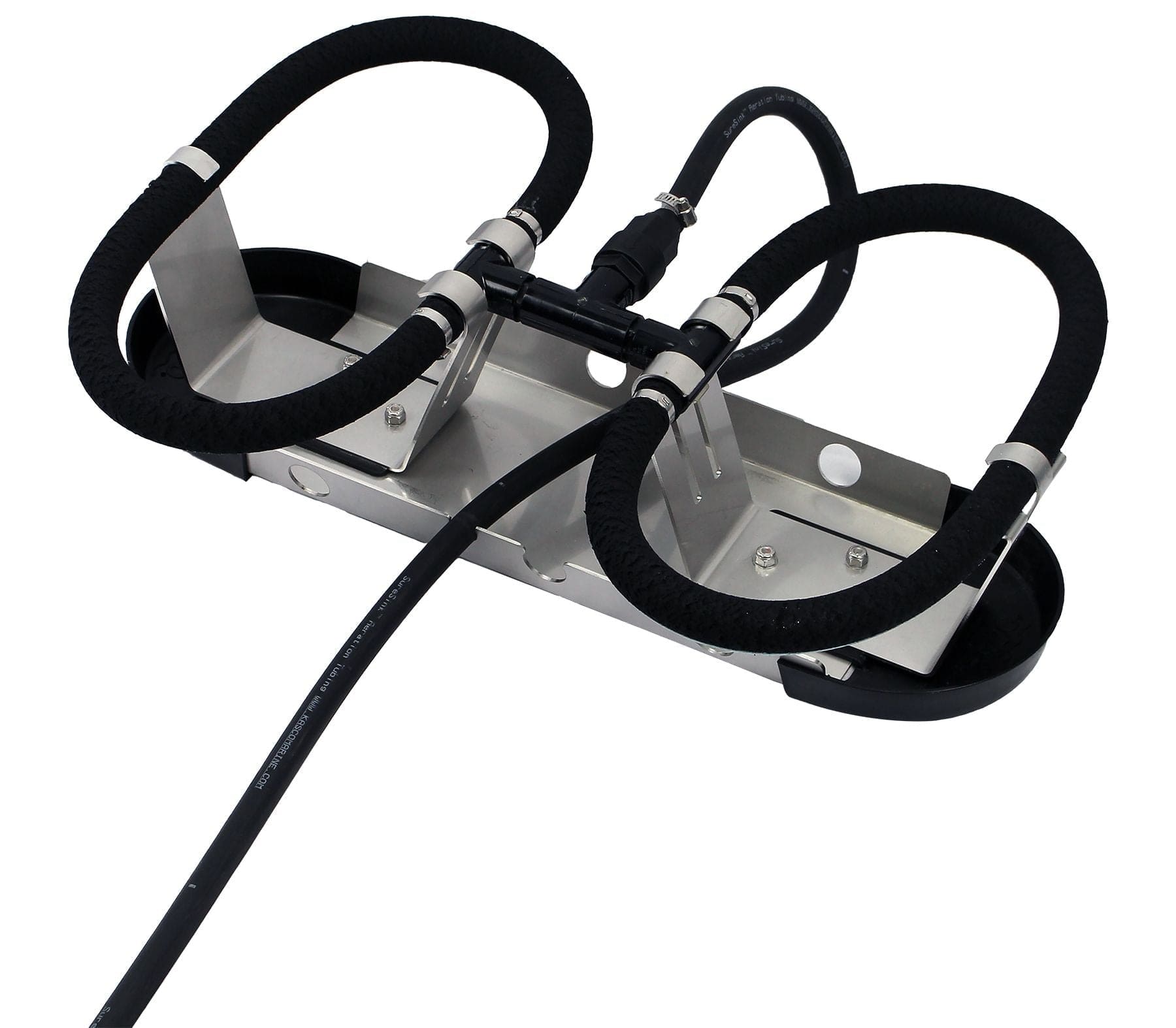
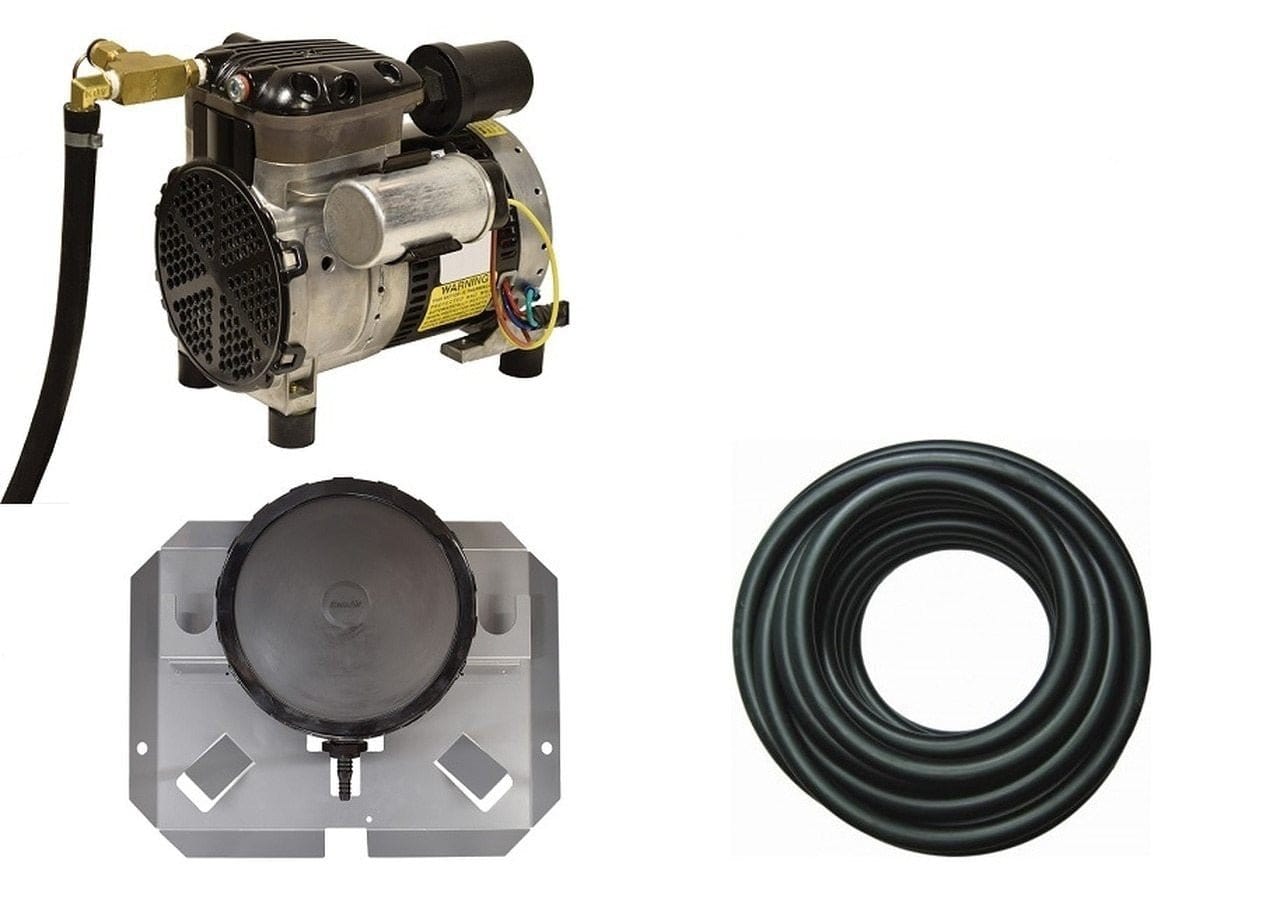
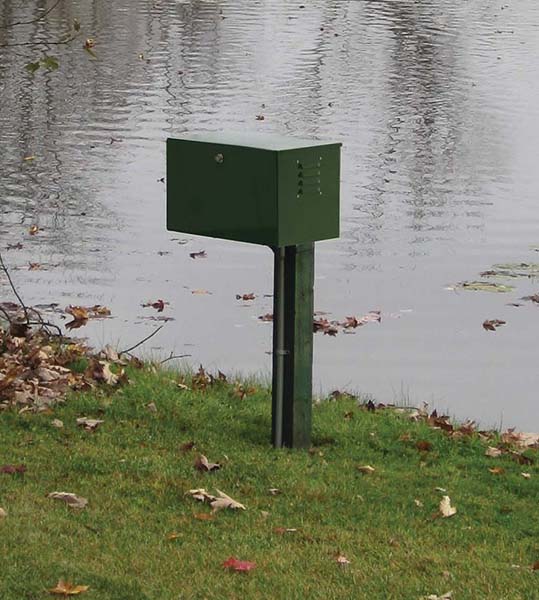
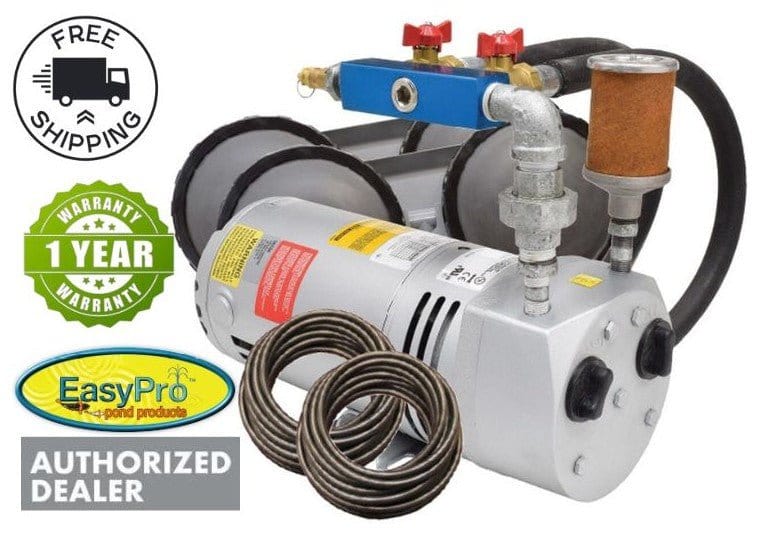
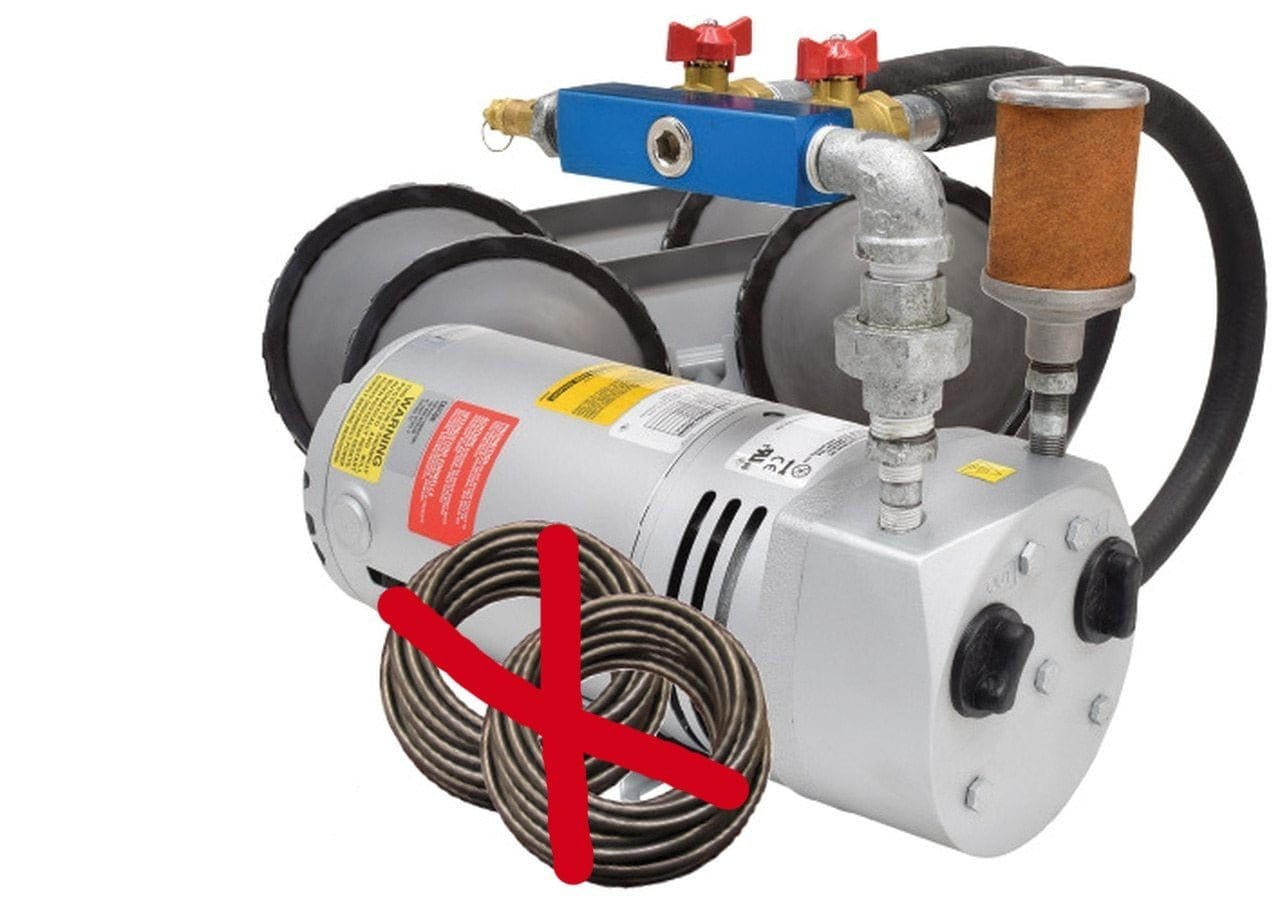
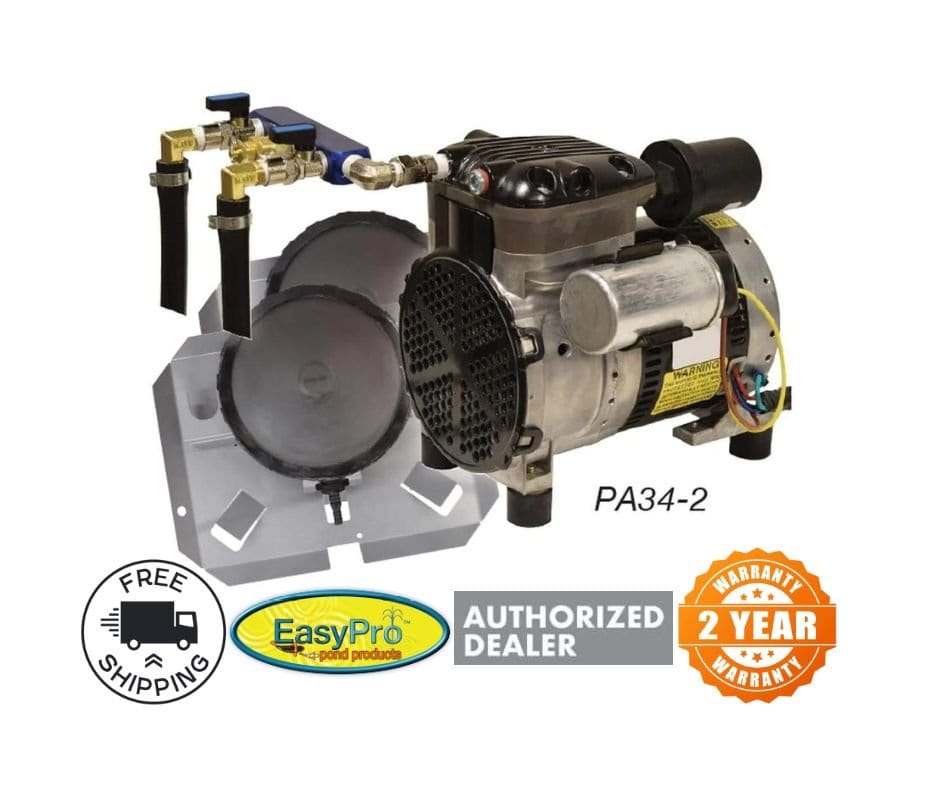
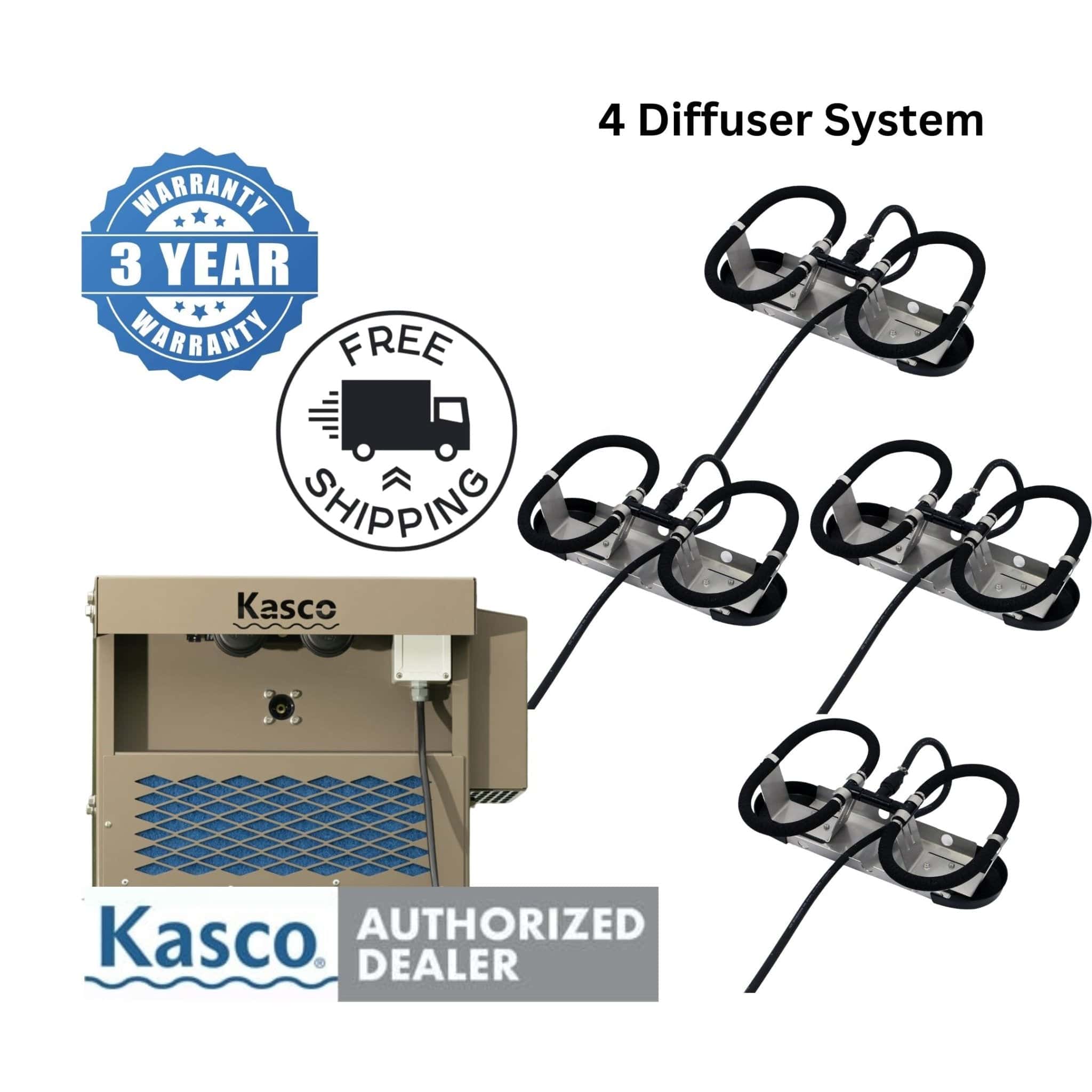
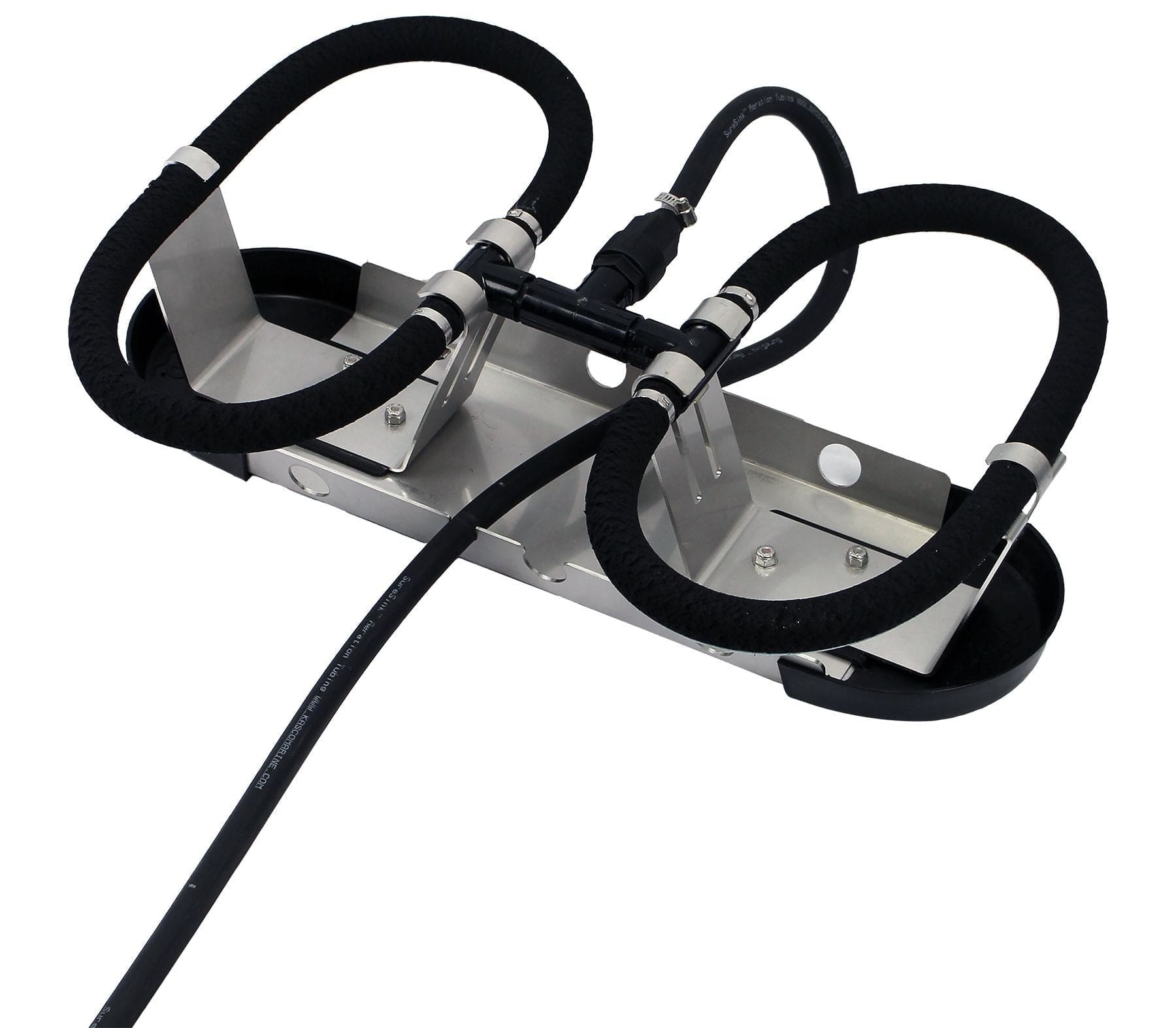
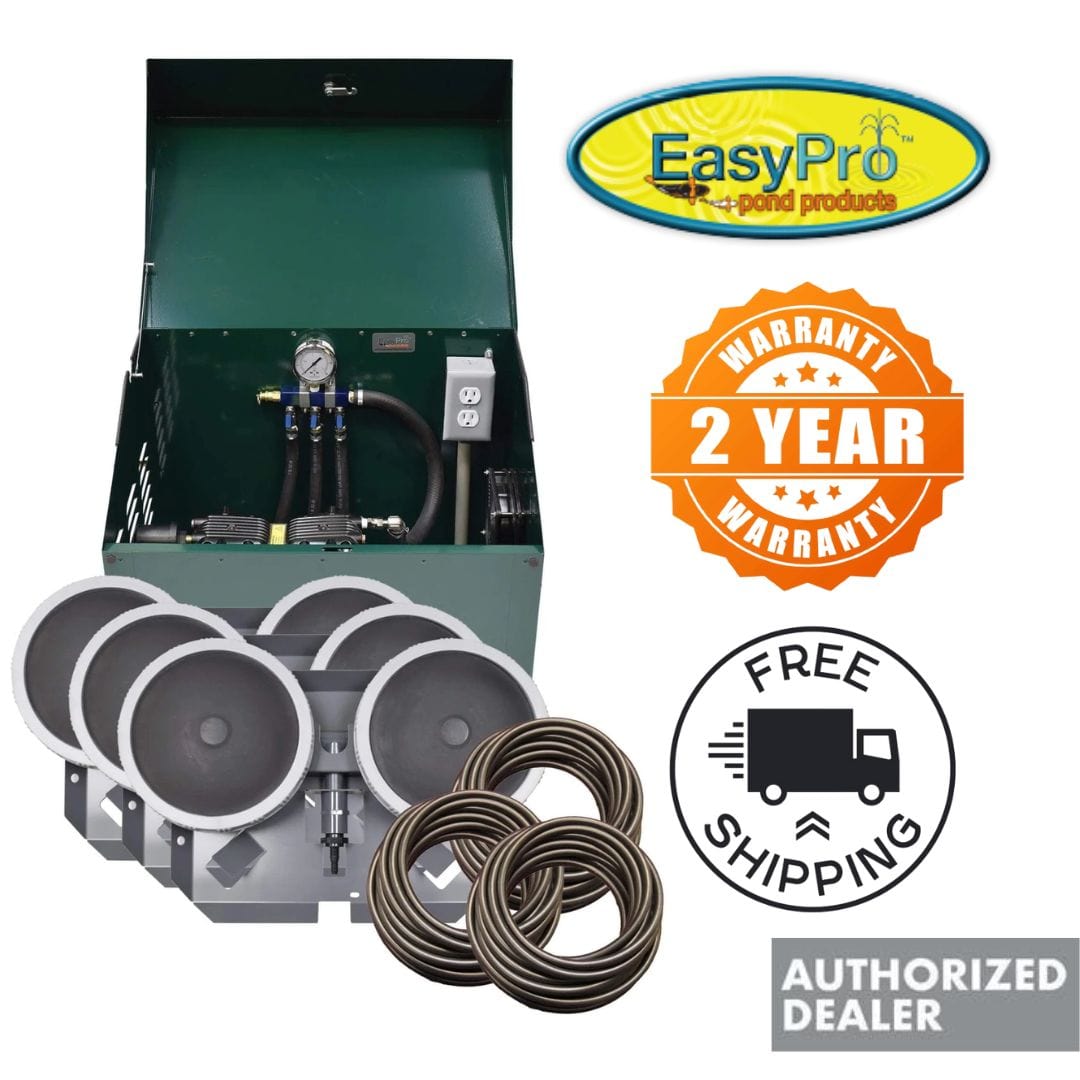
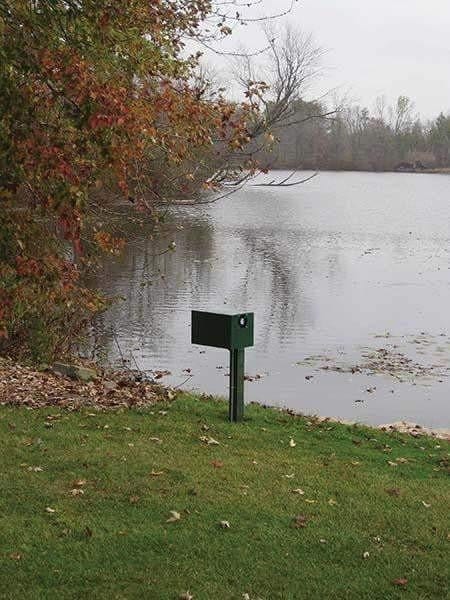
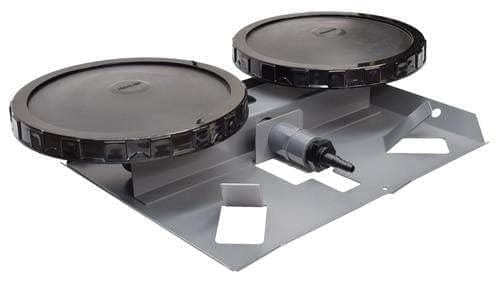
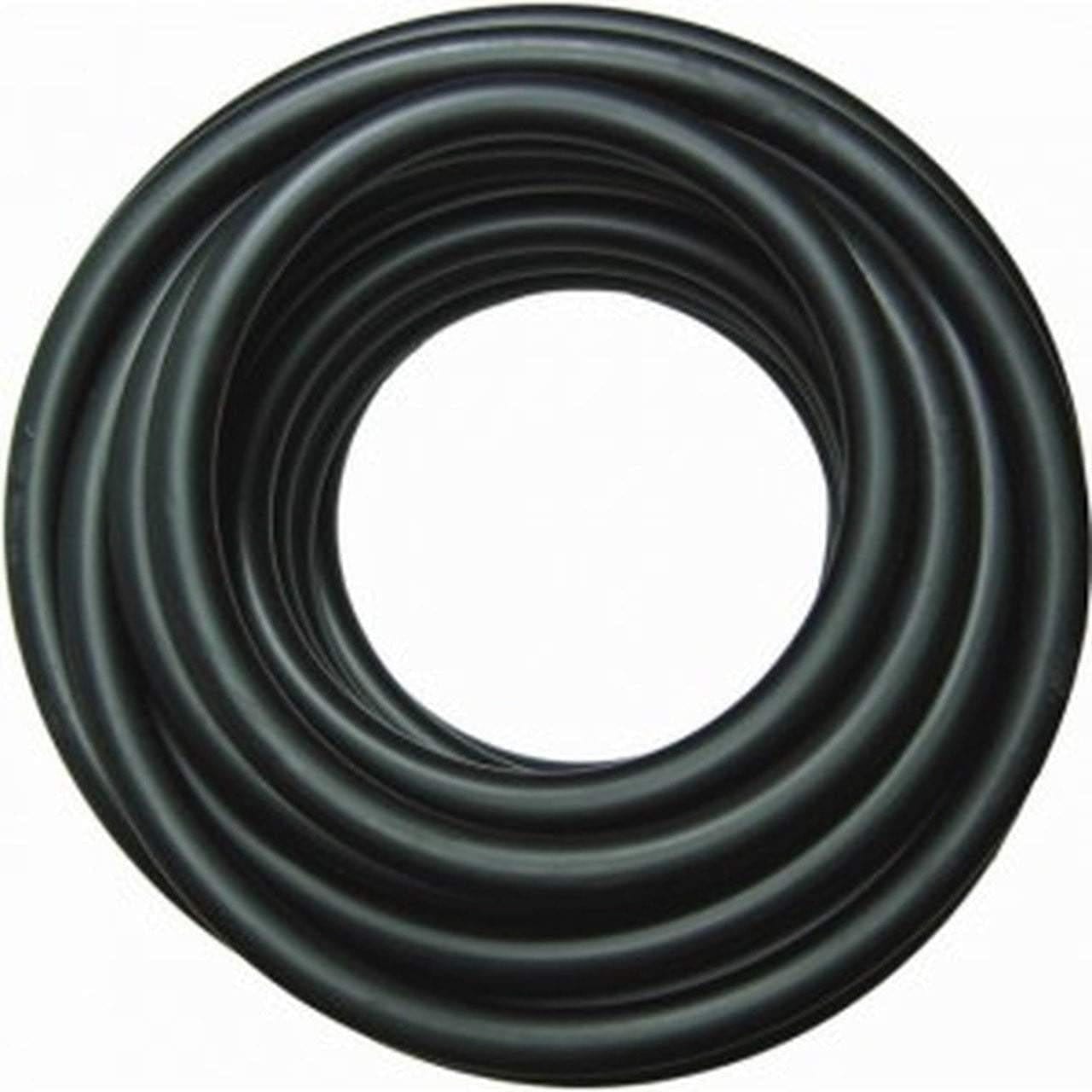
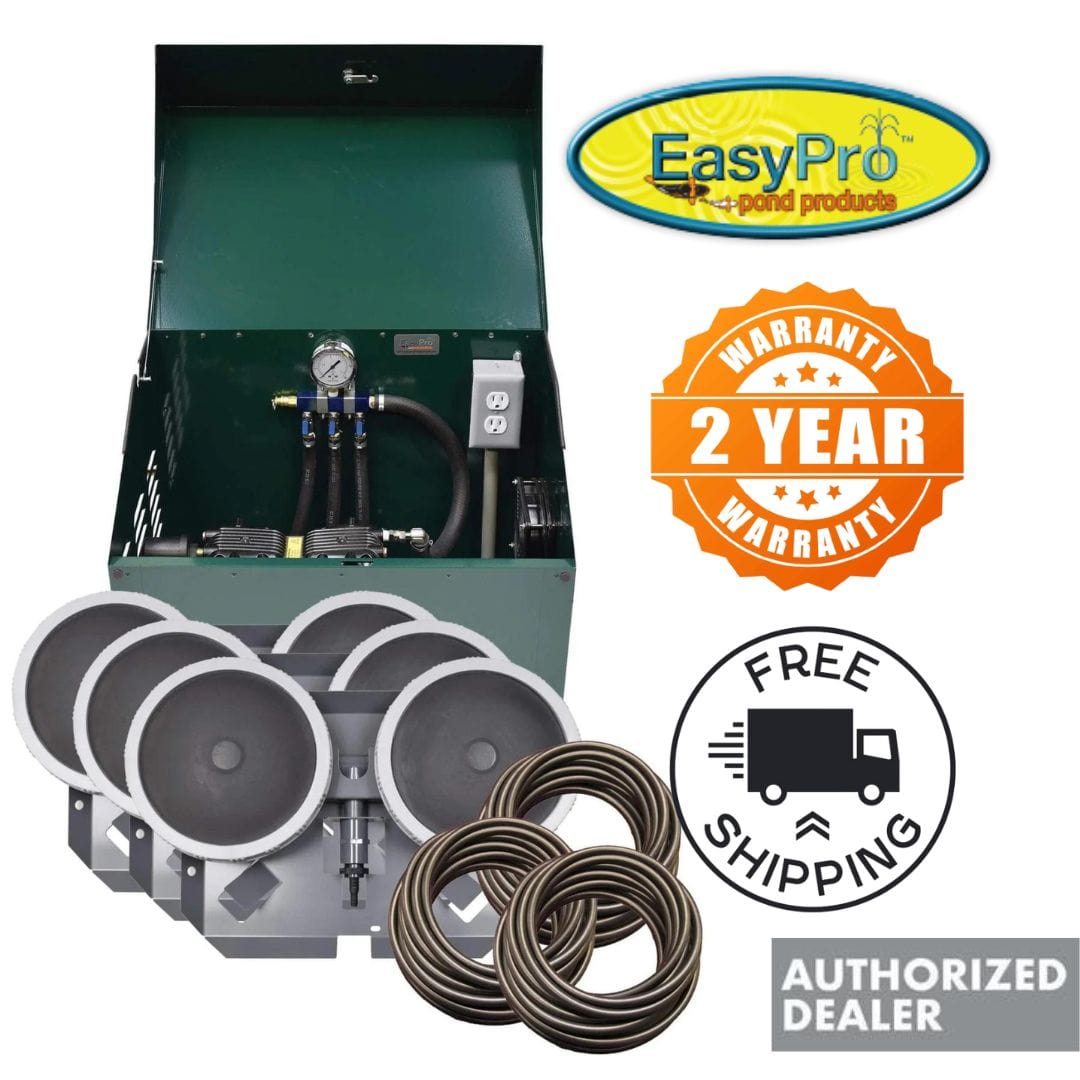
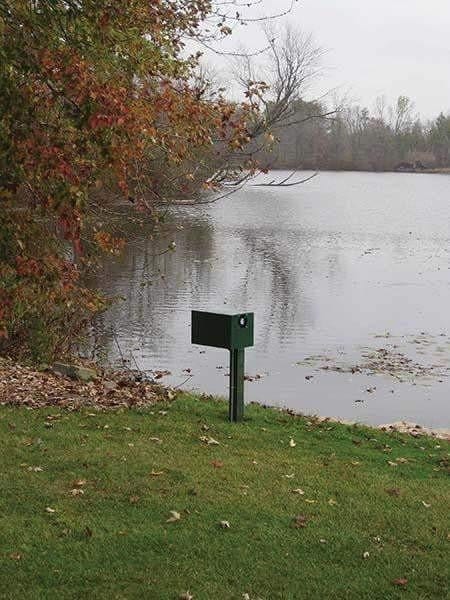
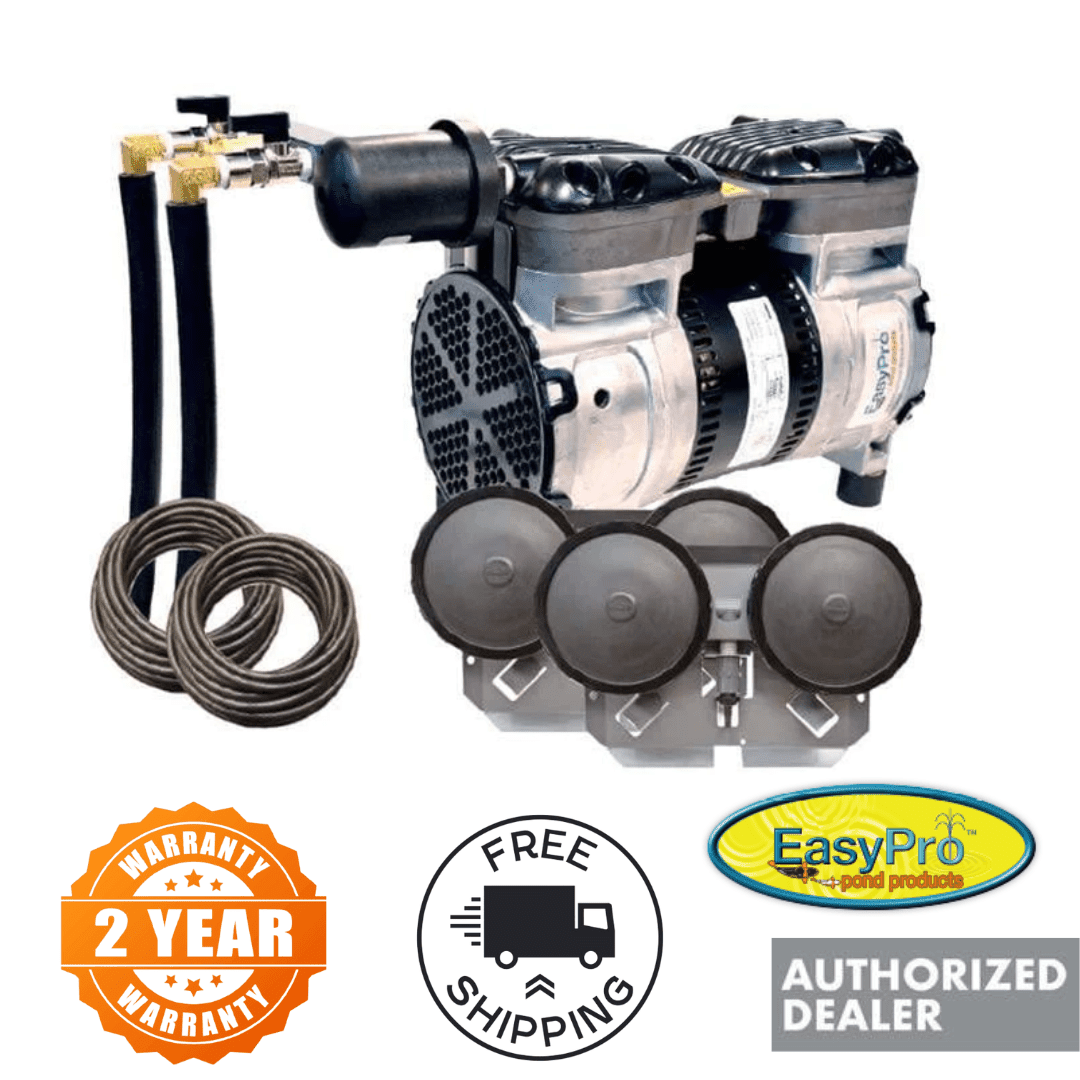
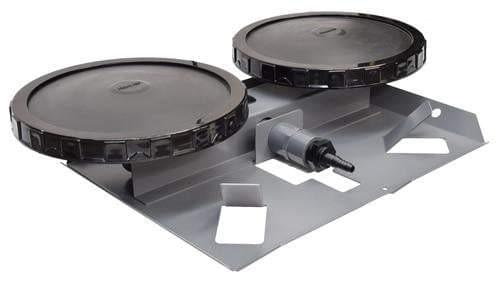
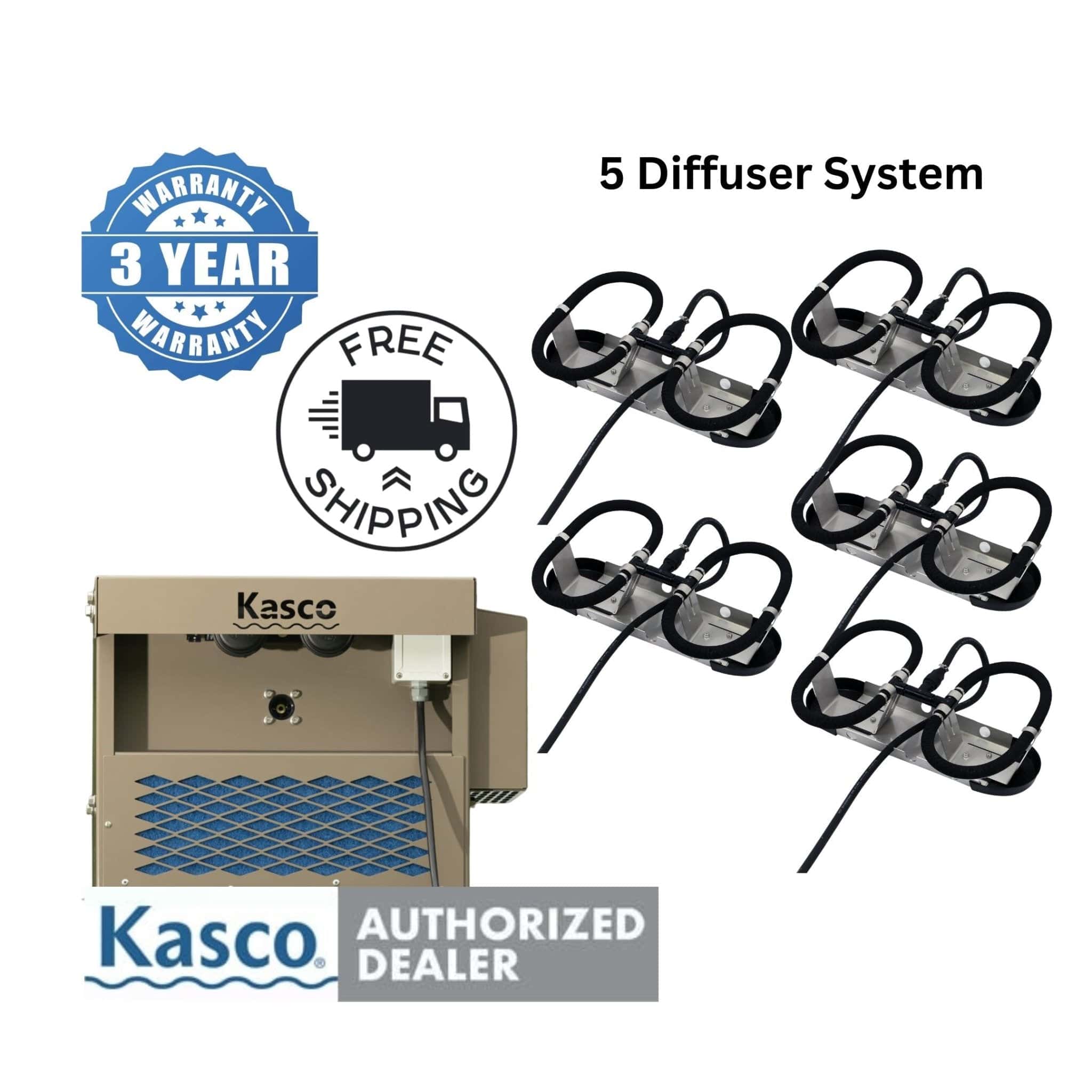
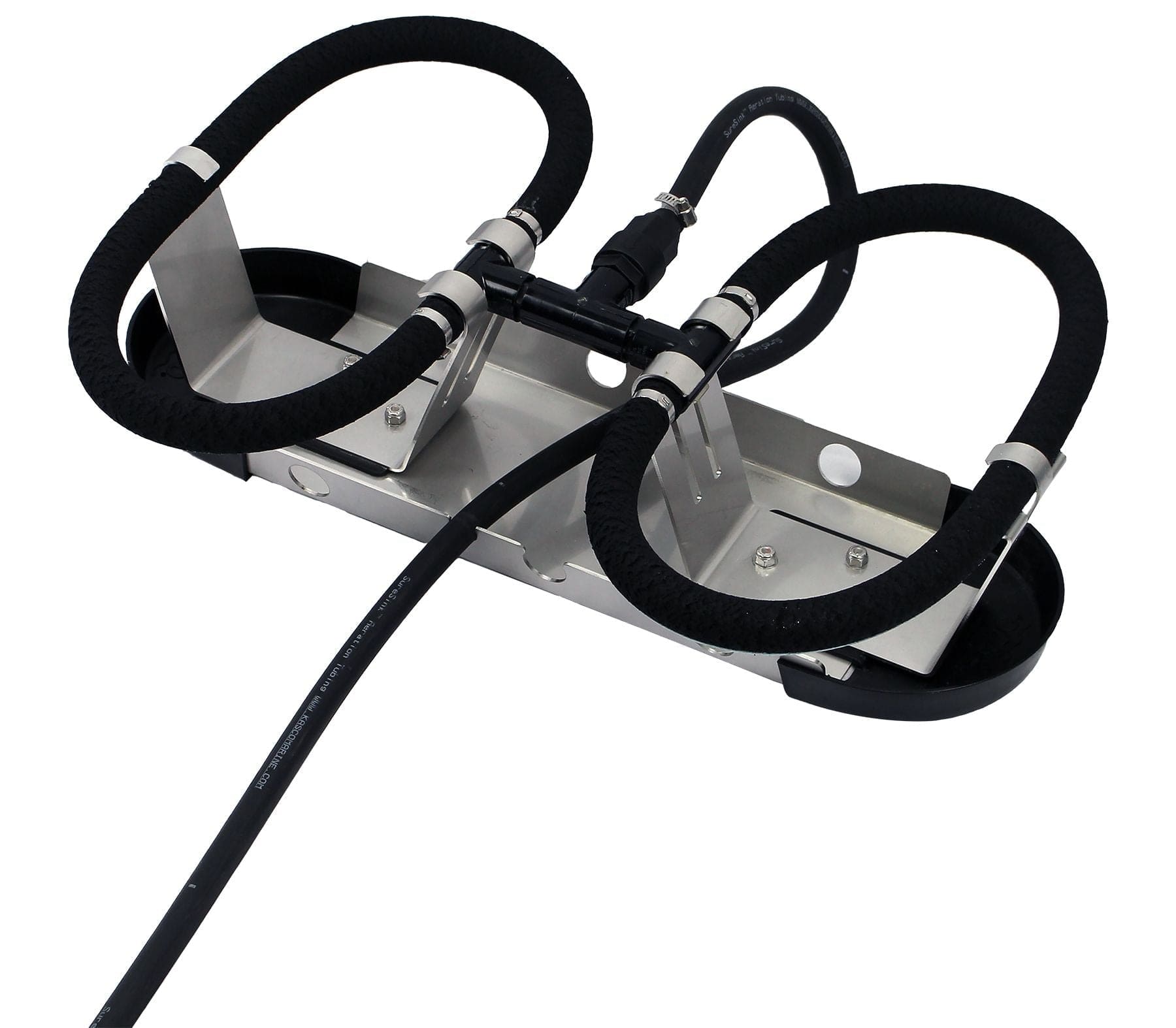
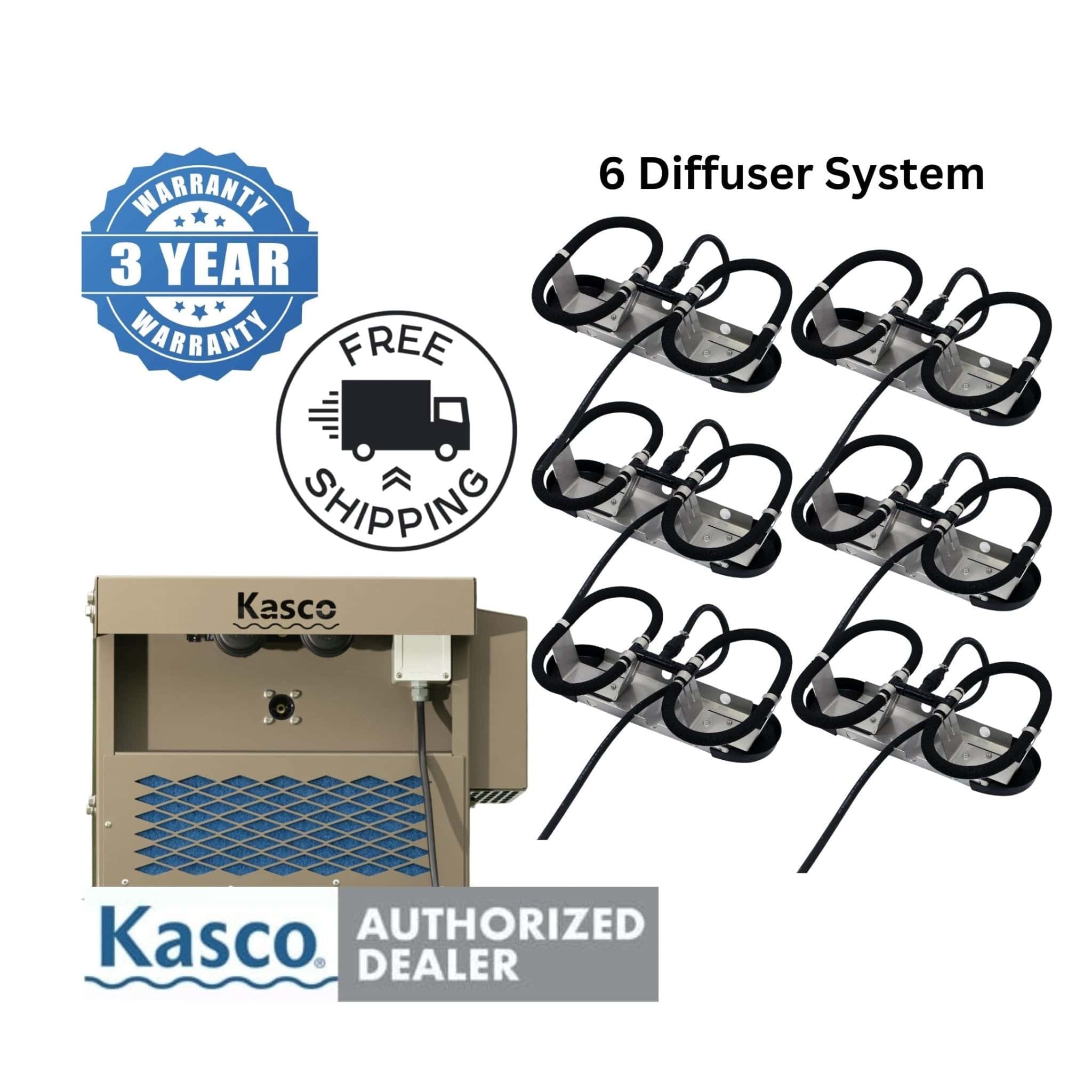
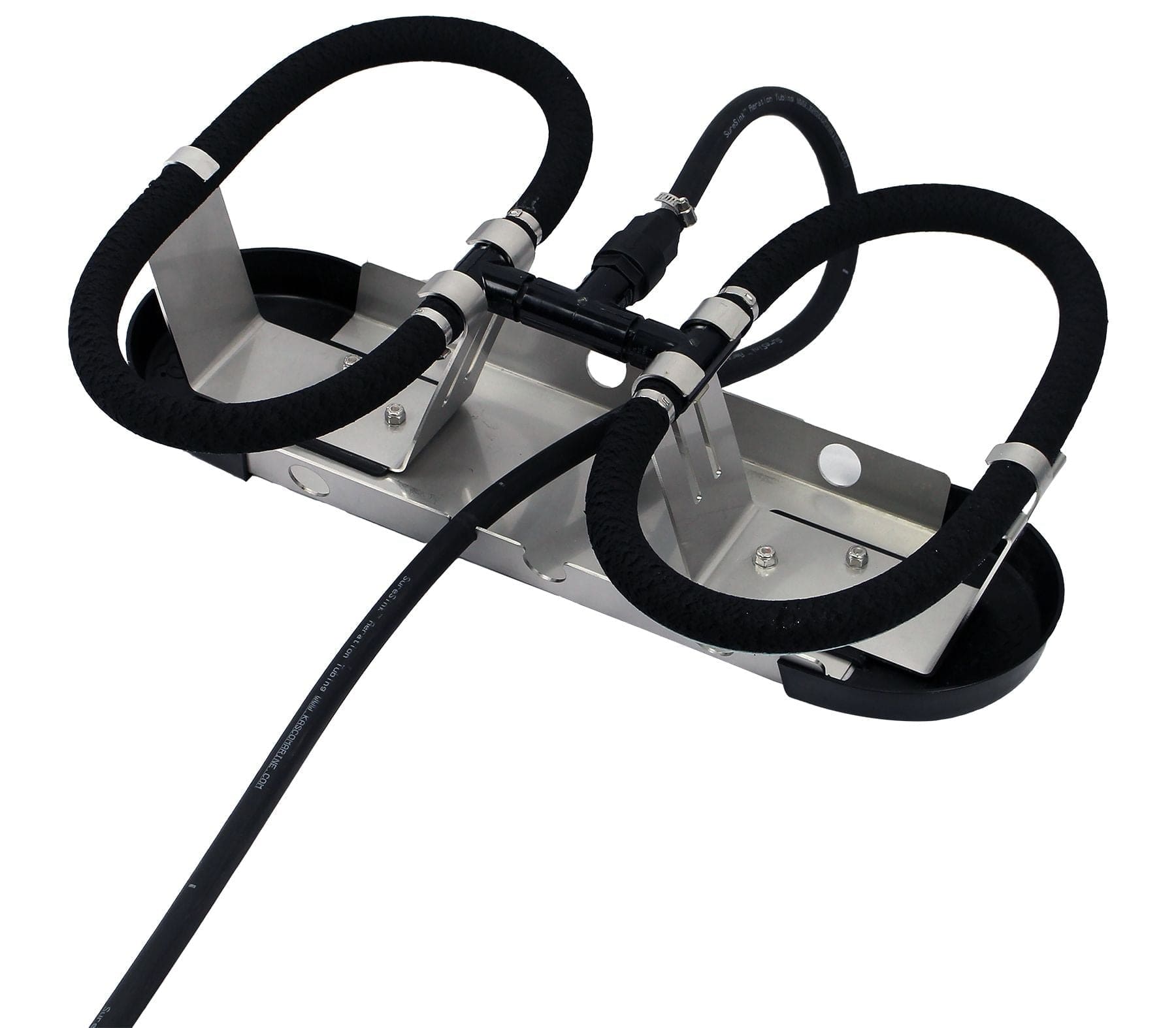
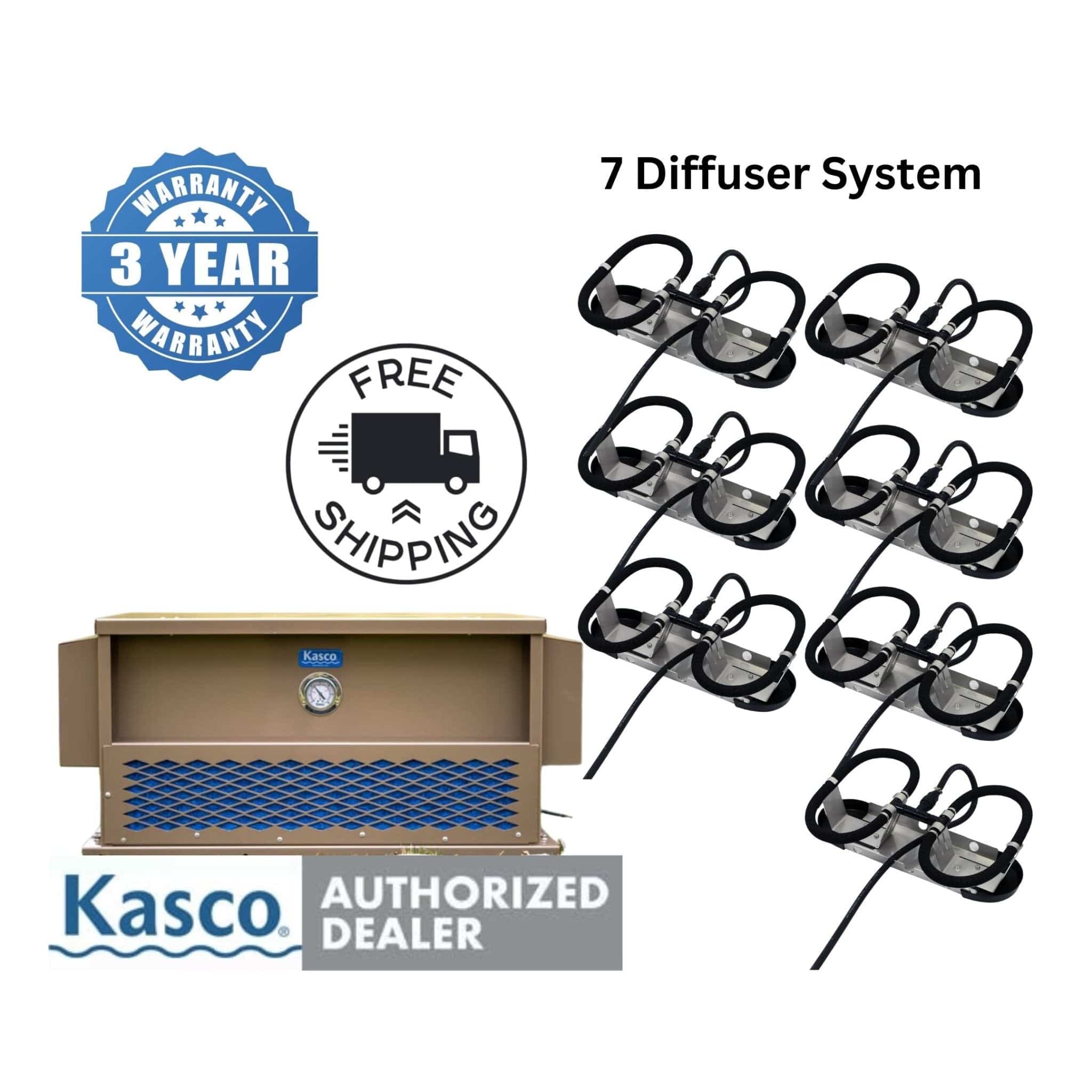
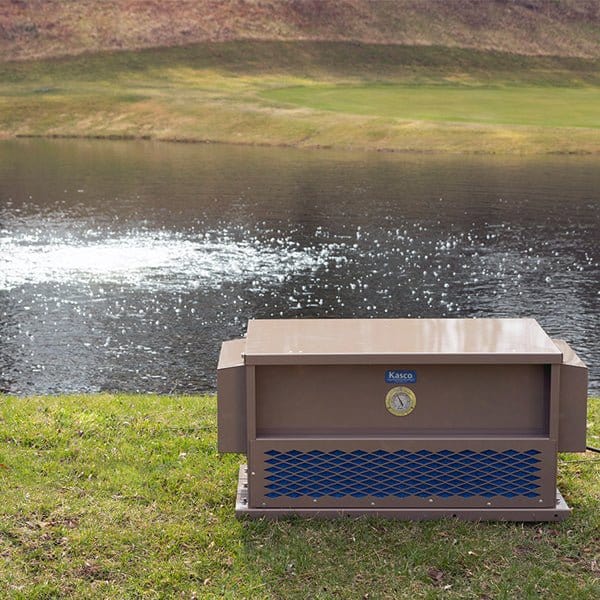
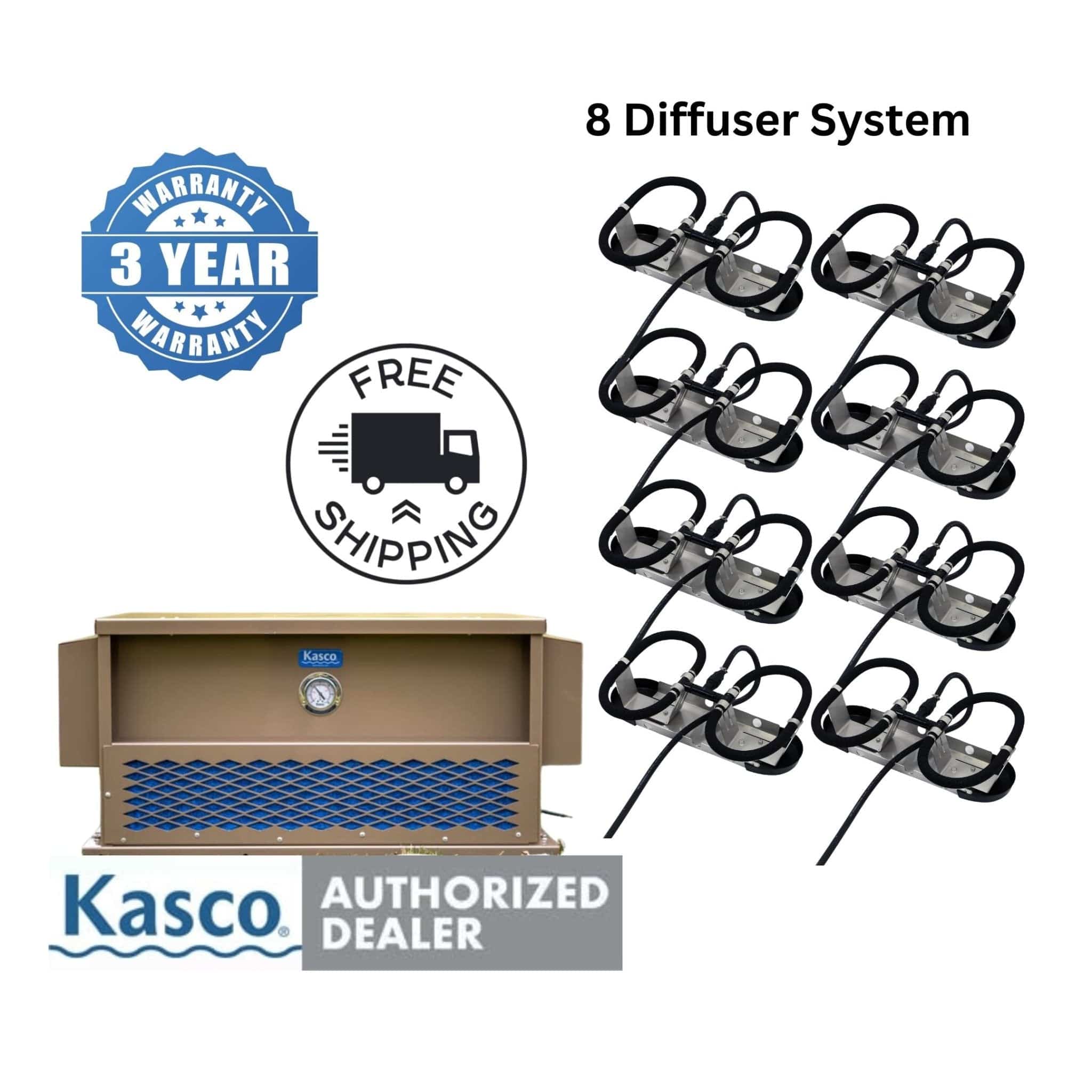
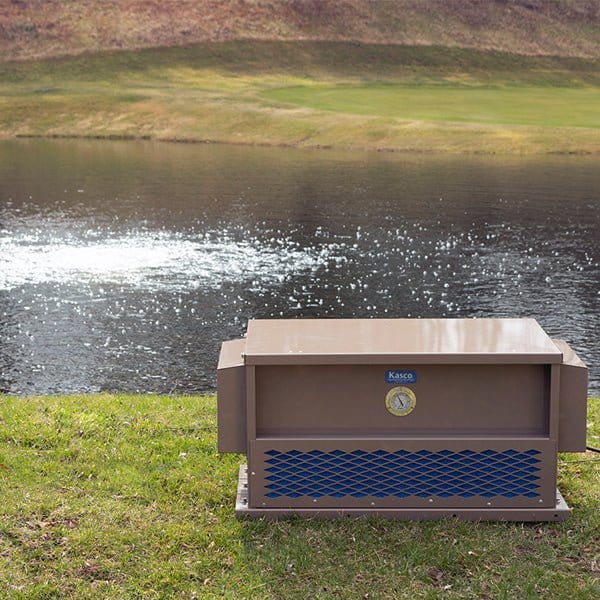
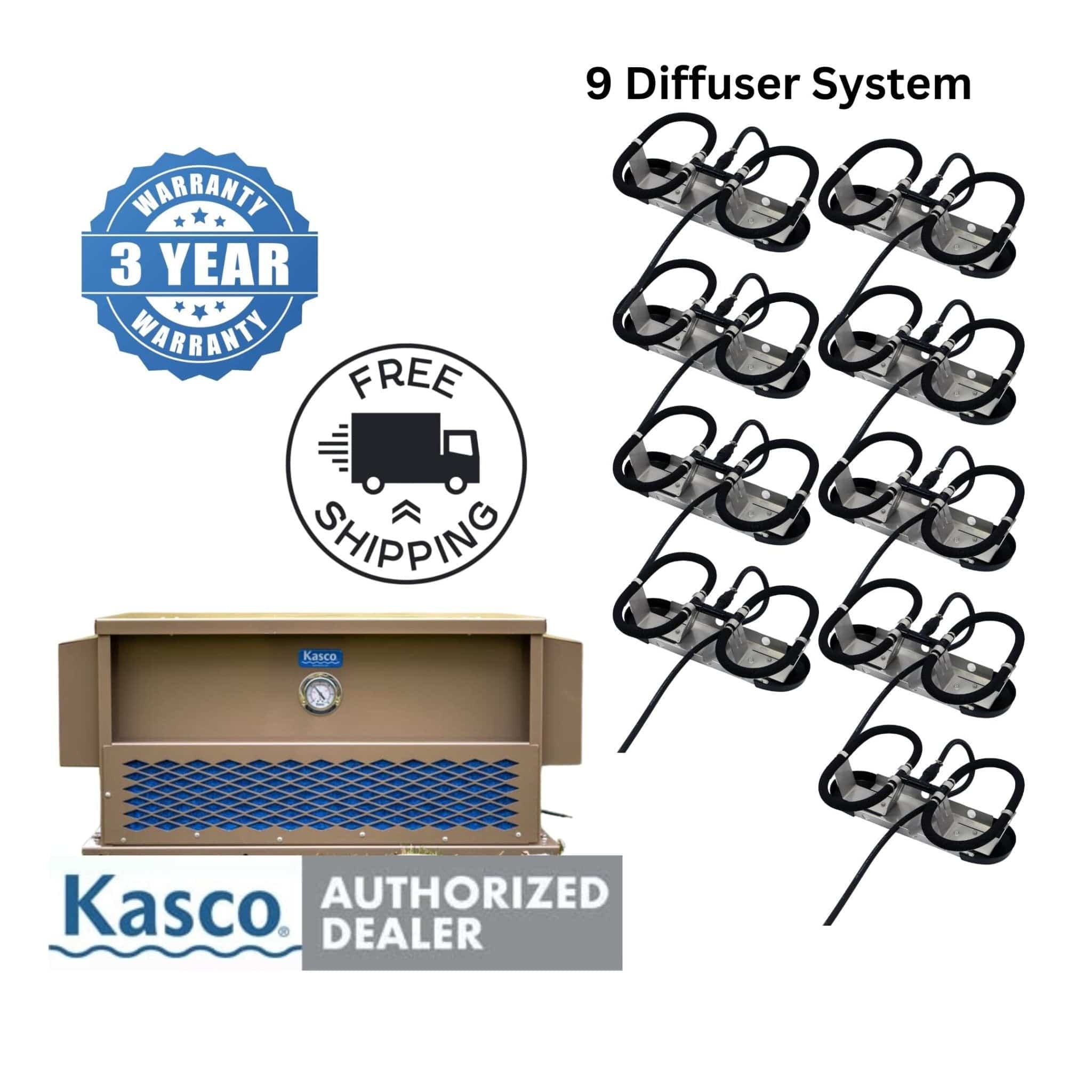
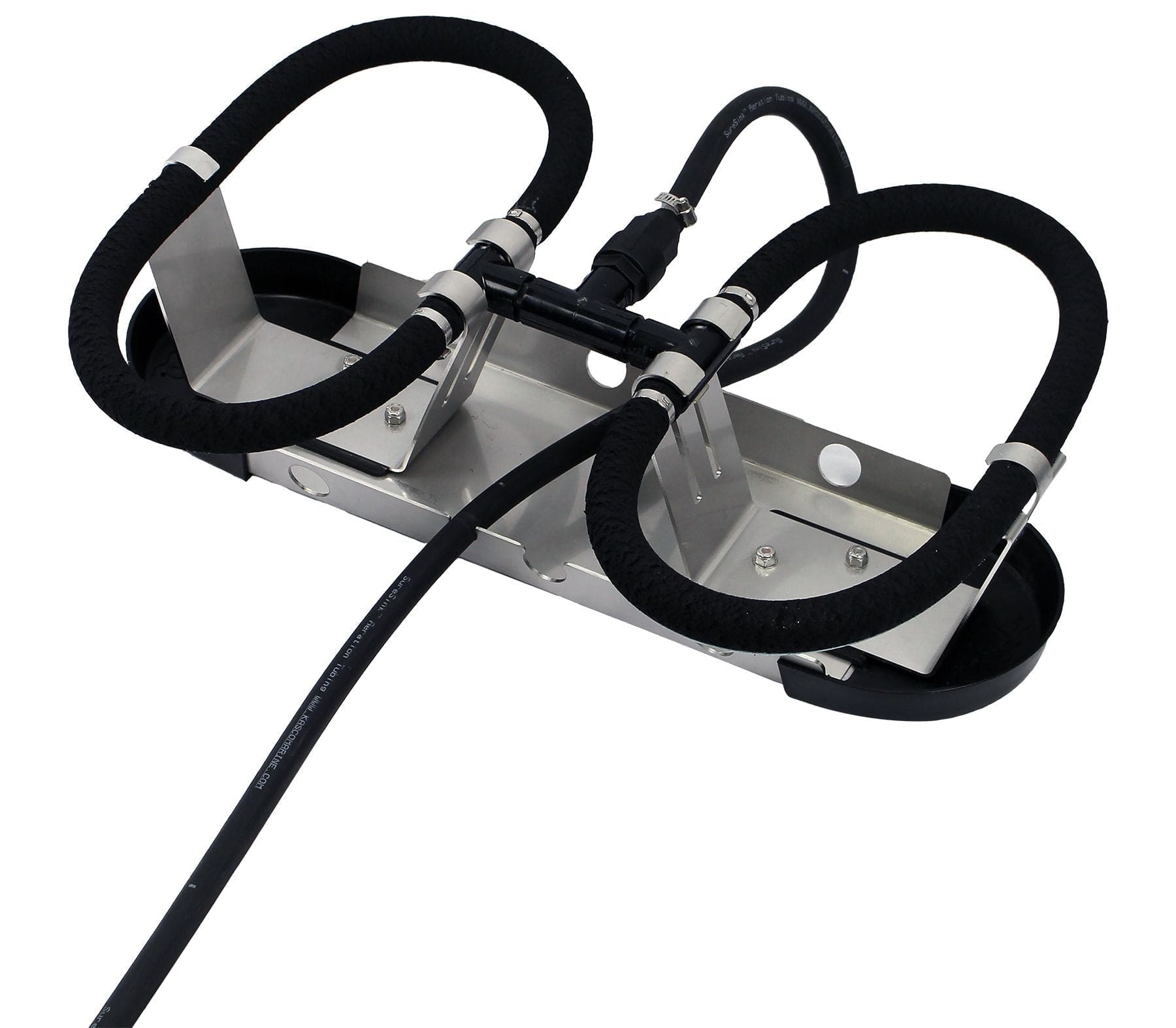
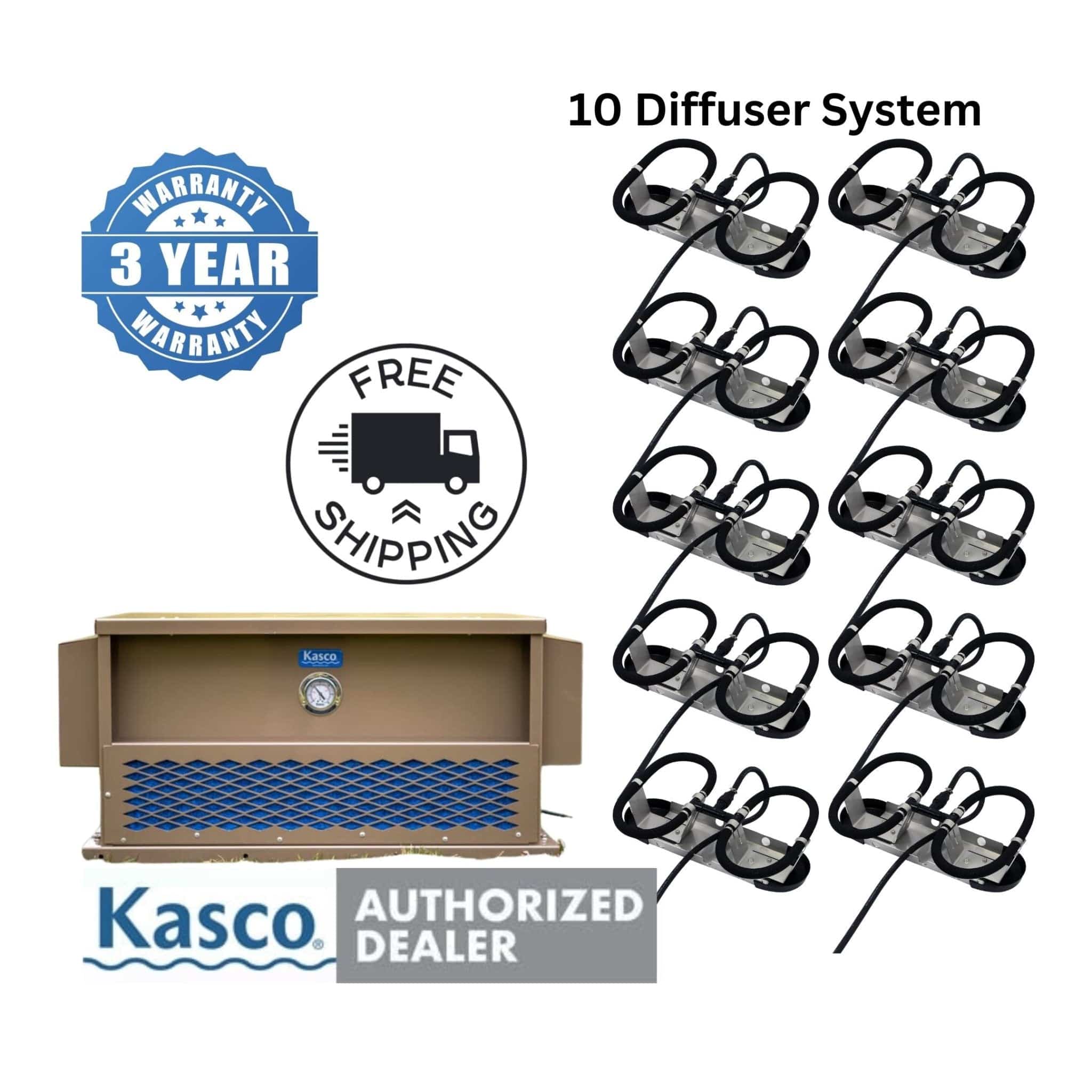
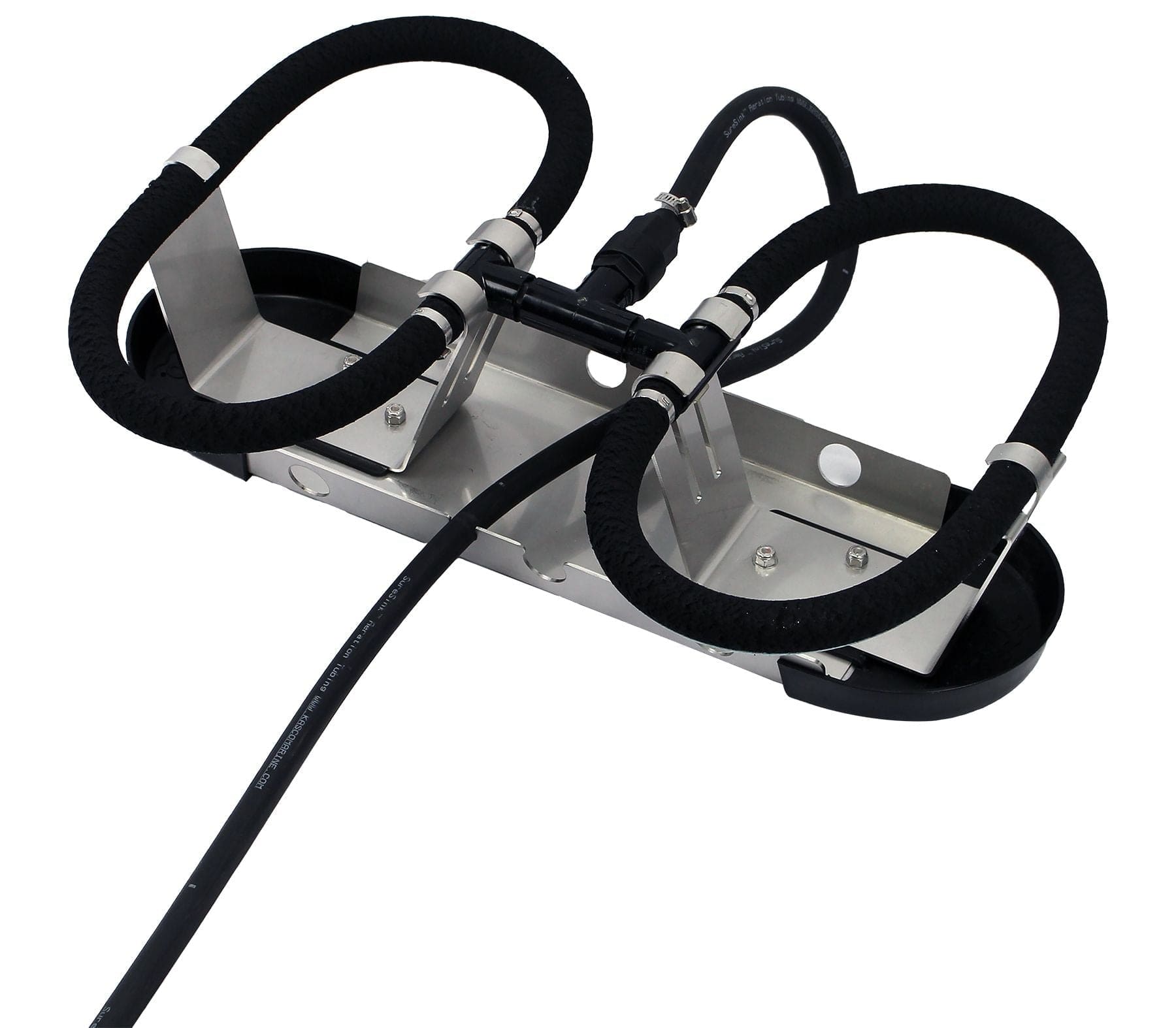
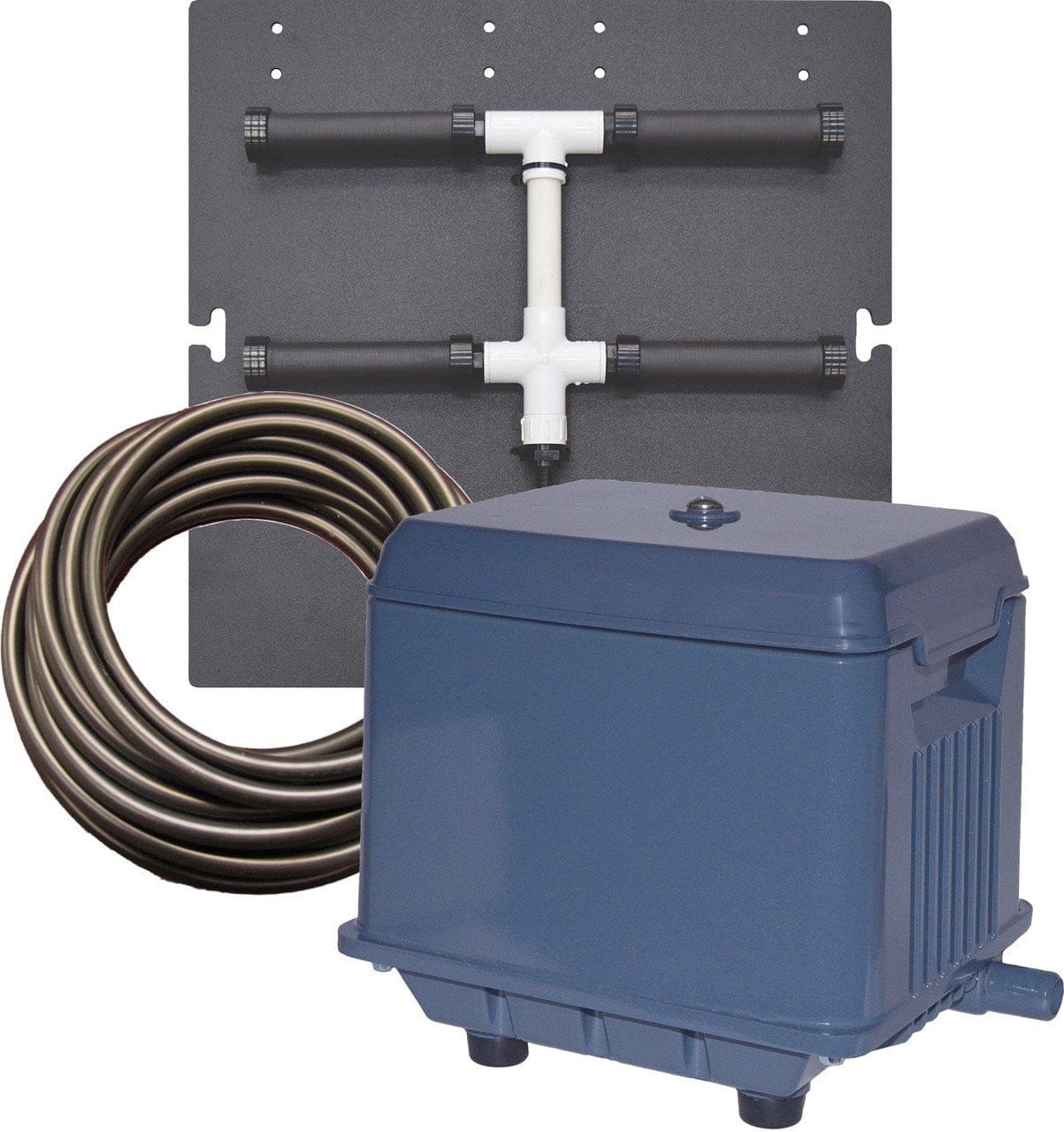
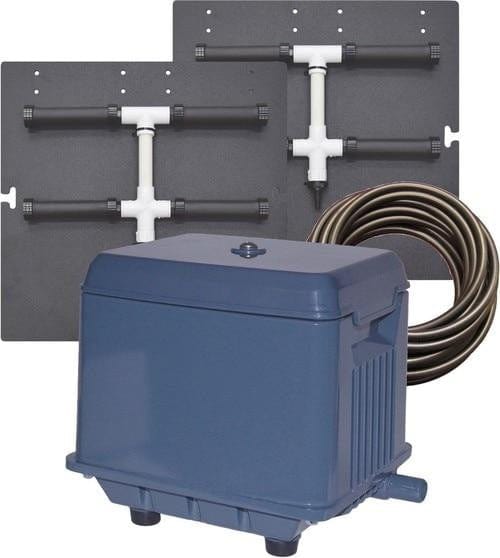
A compressor located on shore pushes air through weighted tubing to diffusers placed on the pond bottom. As air bubbles rise, they lift lower-oxygen water upward and promote steady circulation throughout the entire water column.
This circulation helps:
-
Reduce stagnant bottom zones
-
Support beneficial bacteria activity
-
Improve oxygen consistency
-
Stabilize seasonal temperature layers
-
Encourage long-term nutrient processing
When properly sized, diffused aeration systems operate quietly and efficiently while providing continuous oxygen support.
Choosing the Right System for Your Pond
Selecting the right aeration system depends on:
-
Pond size and surface area
-
Average and maximum depth
-
Access to electricity
-
Seasonal or year-round operation
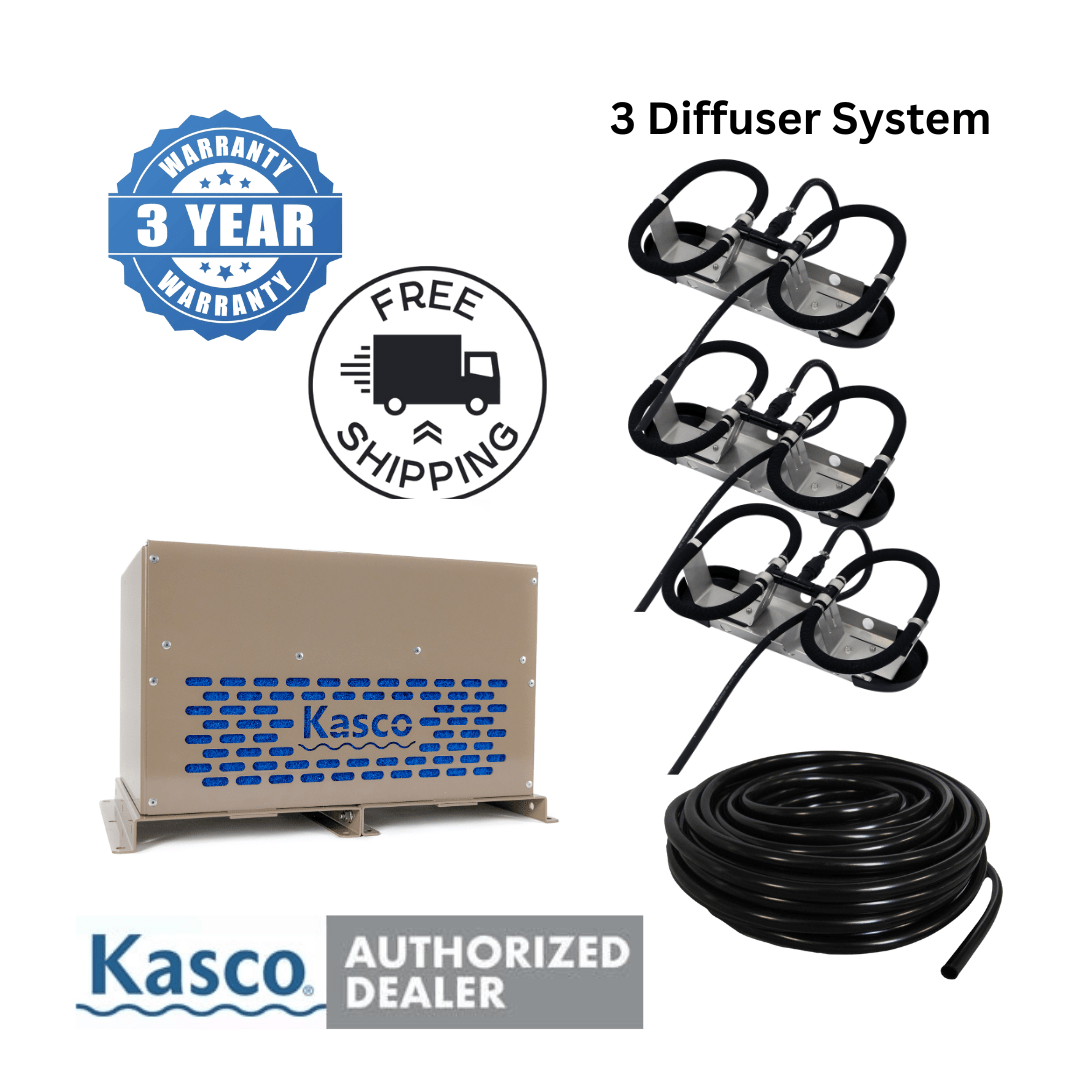
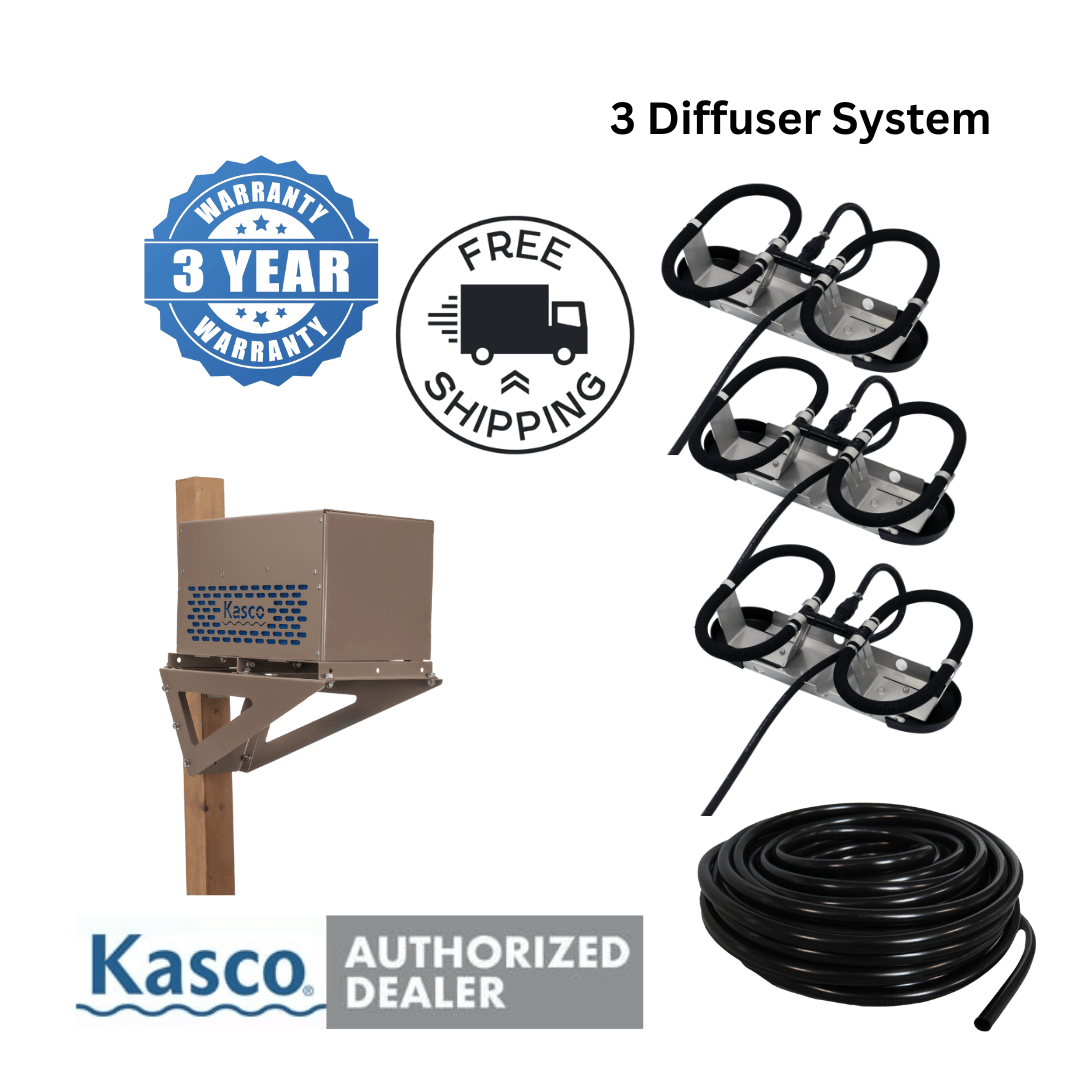
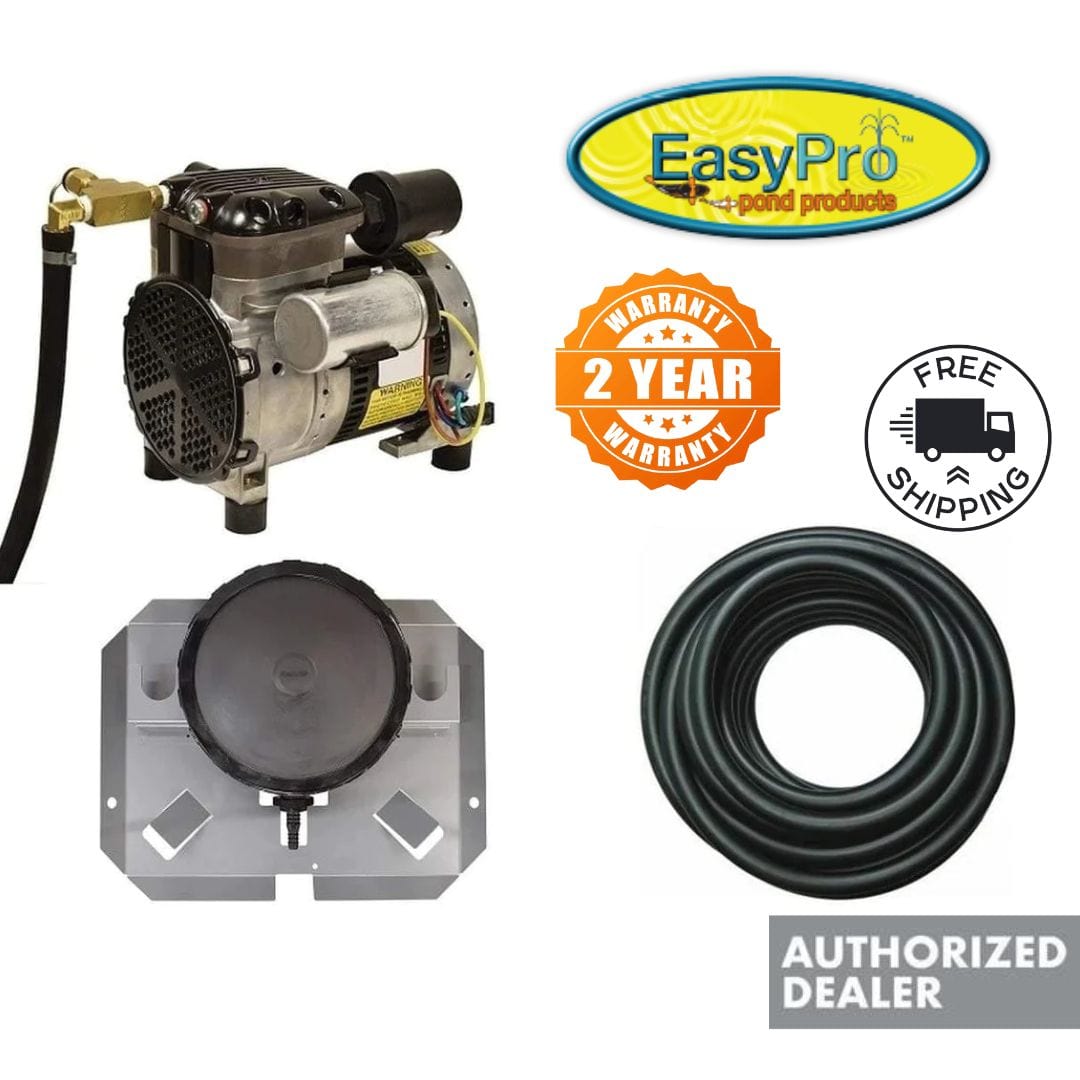
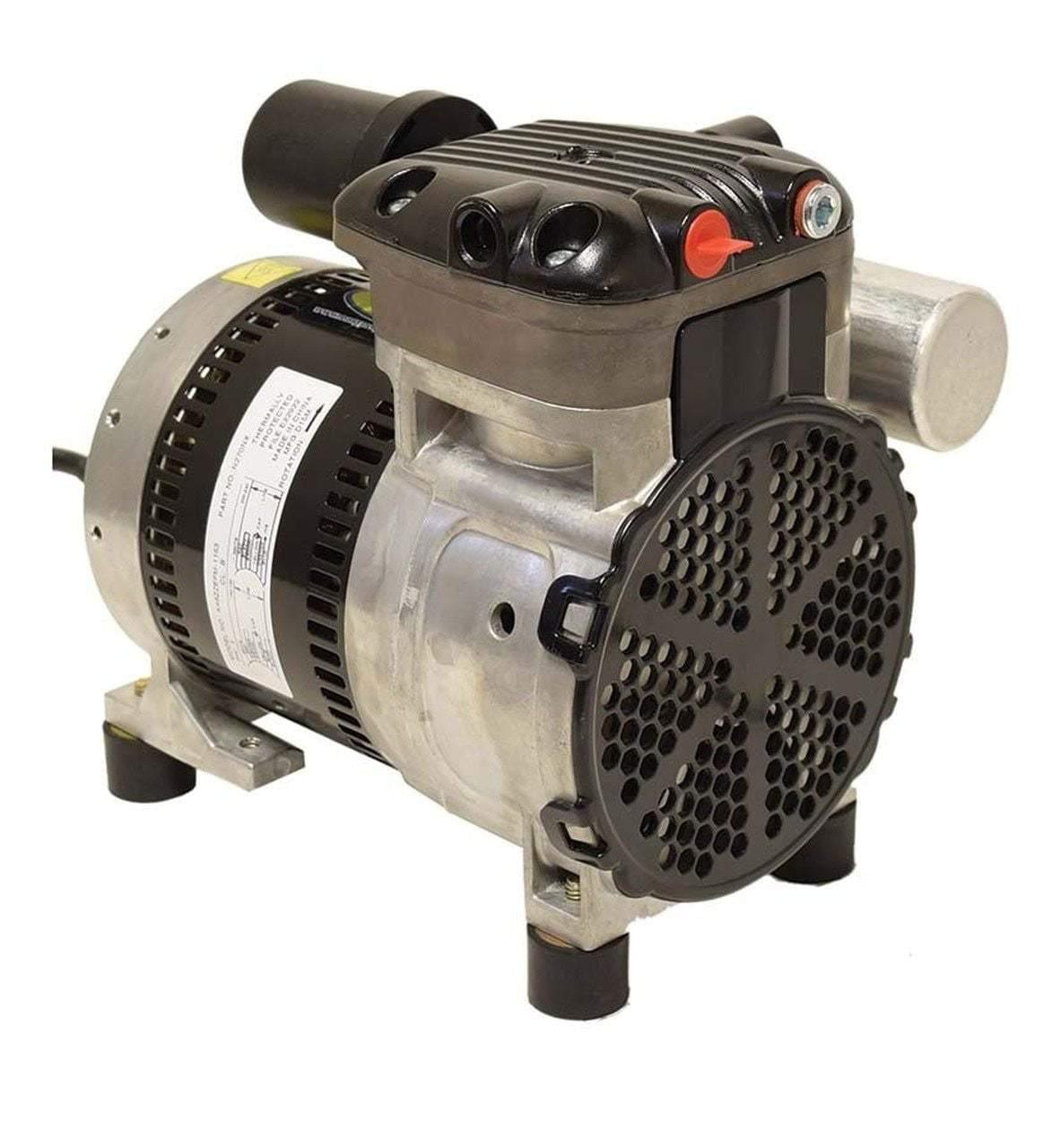
Supporting components may include compressors, diffusers, tubing, and replacement parts.
If electricity is limited, solar or windmill aeration systems may be alternatives.
If you are unsure what size system your pond needs, begin by determining pond acreage and depth. Proper sizing ensures effective circulation, reliable performance, and long-term results.
Frequently Asked Questions About Diffused Aeration
Will aeration help reduce algae?
Aeration improves oxygen levels and nutrient processing, which helps reduce the conditions that allow excessive algae growth over time.
Can diffused aeration prevent winter fish kills?
When operated correctly, diffused aeration helps maintain oxygen under ice and significantly reduces the likelihood of winter fish mortality caused by oxygen depletion.
Will aeration reduce pond muck?
Improved oxygen levels support natural biological breakdown of organic material. Pairing aeration with beneficial bacteria often enhances results.
Is aeration necessary for backyard ponds?
Not every pond requires aeration, but every private pond benefits from improved oxygen levels — especially if they experience algae growth, muck buildup, or seasonal fish stress.
Is diffused aeration noisy?
Modern systems are designed to operate quietly when properly installed and maintained.
Related Pond Management Resources
If you’re considering diffused aeration, these guides may also help you better understand pond oxygen management and long-term water balance: