
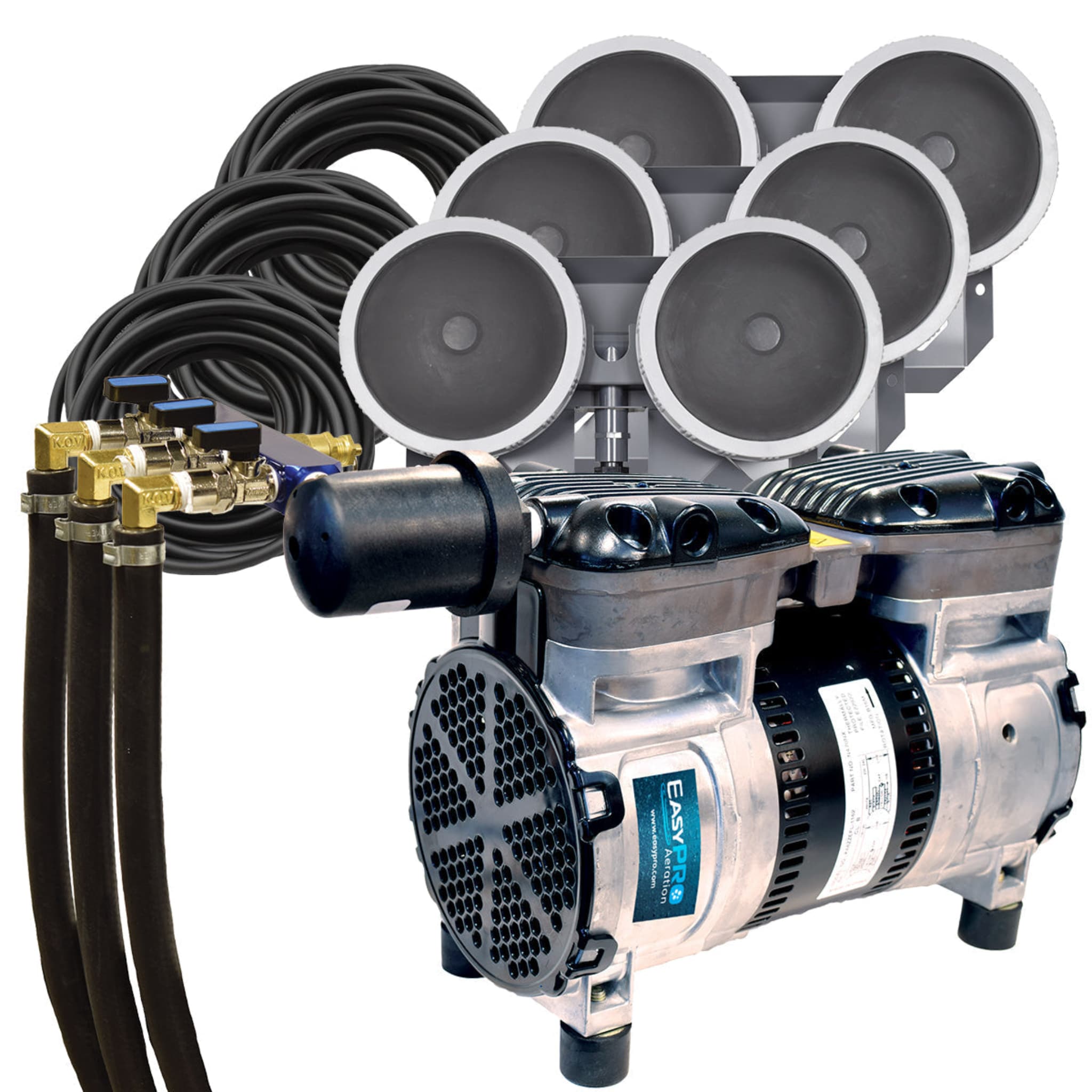
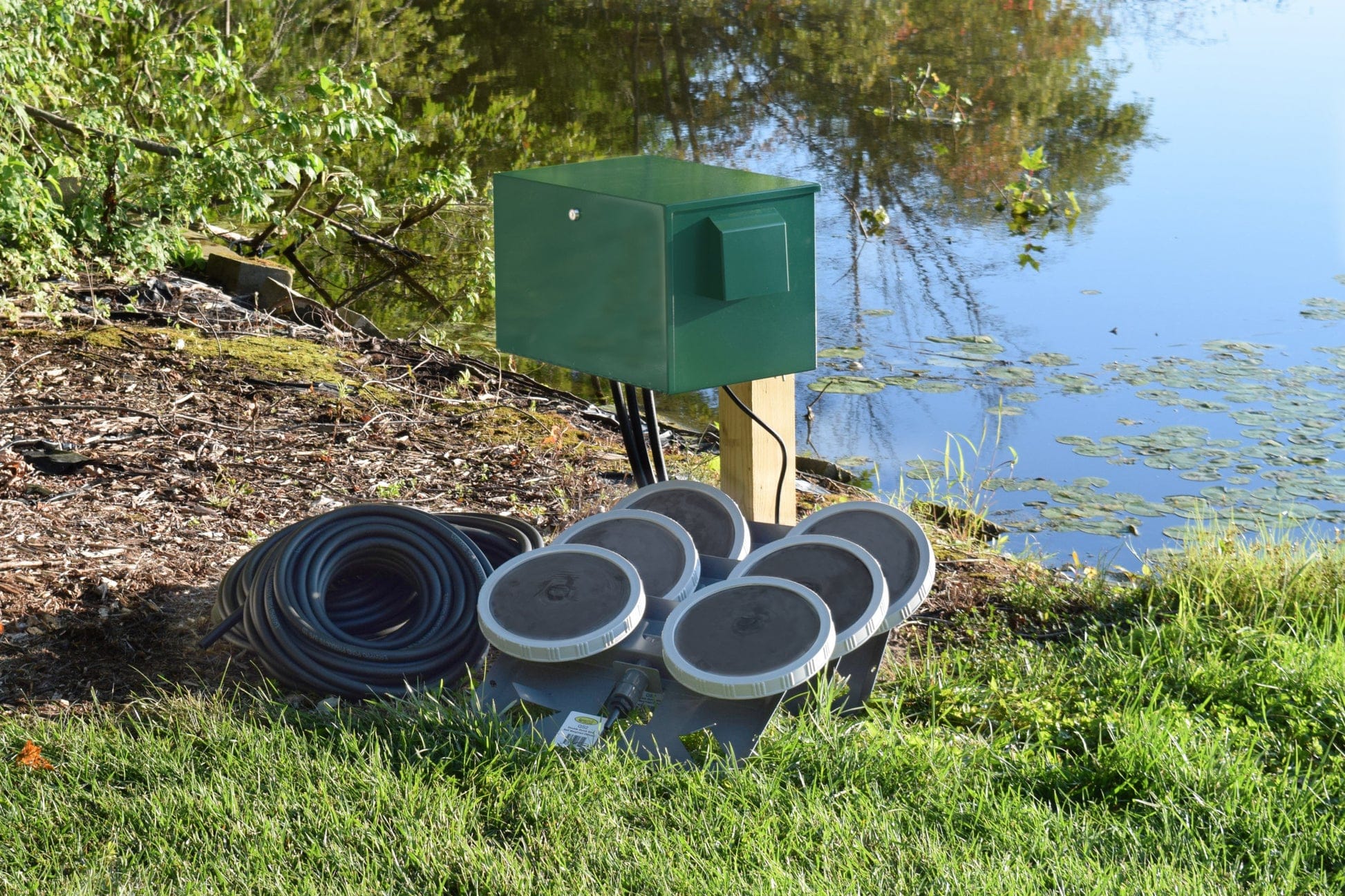


A fish pond aeration system needs to do more than just oxygenate — it needs to deliver sustained, high-volume airflow to every corner of the water body, 24 hours a day, through every season. The EasyPro PA66 1/2 HP triple diffuser rocking piston system places three QS2 membrane diffusers at separate locations on the pond floor, delivering 1.5 CFM per diffuser for a total of 4.5 CFM of oil-free air. This is the fish pond aeration system for heavily stocked ponds, trout ponds, catfish ponds, and any water body where oxygen demand is high and dead zones are not an option.
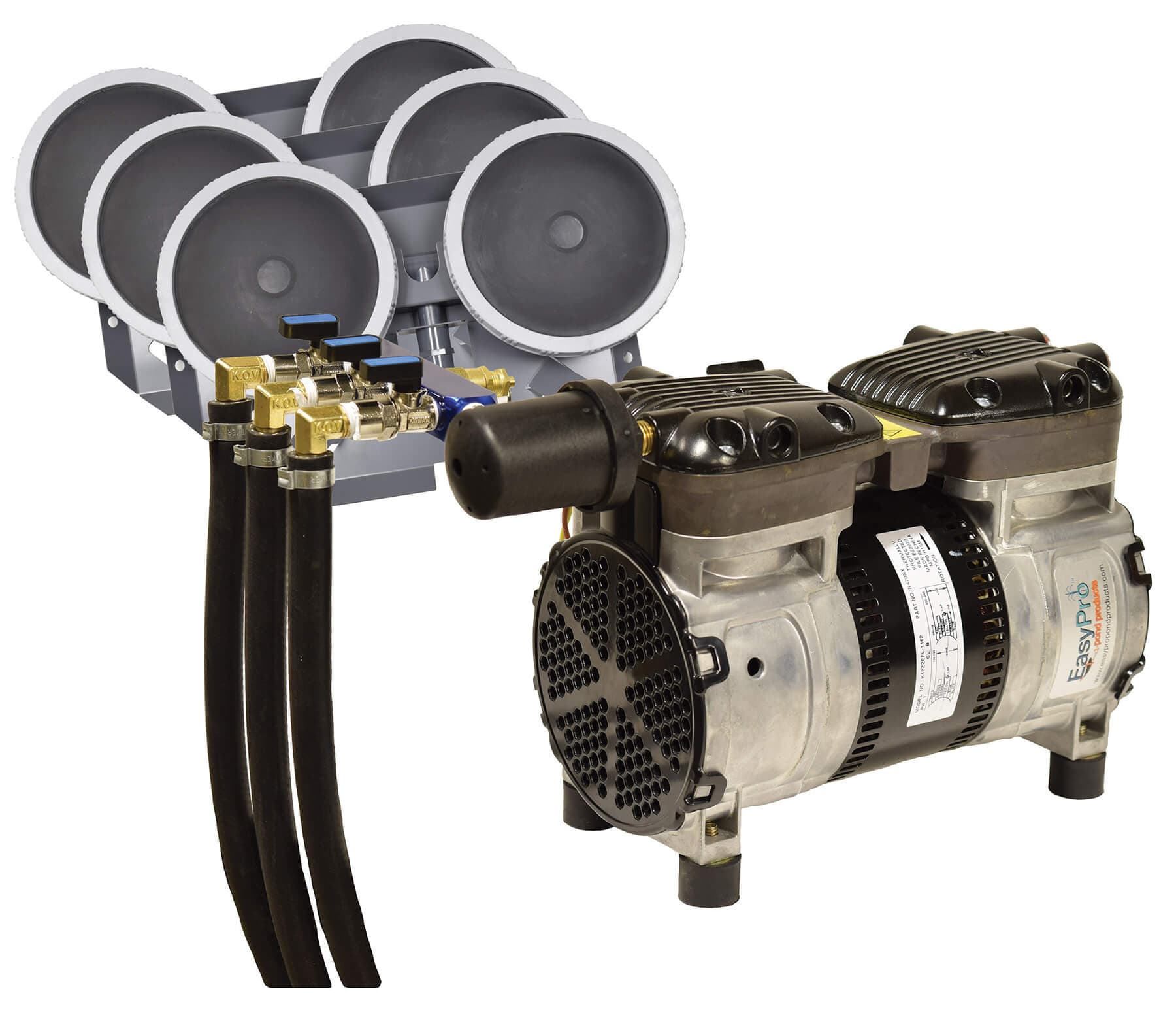
The SRC50 rocking piston compressor is purpose-built for continuous duty operation and handles depths up to 50 feet. Every SRC50 compressor ships with the triple outlet three-way valve assembly pre-configured — giving you independent airflow control to each of the three diffuser lines right out of the box.
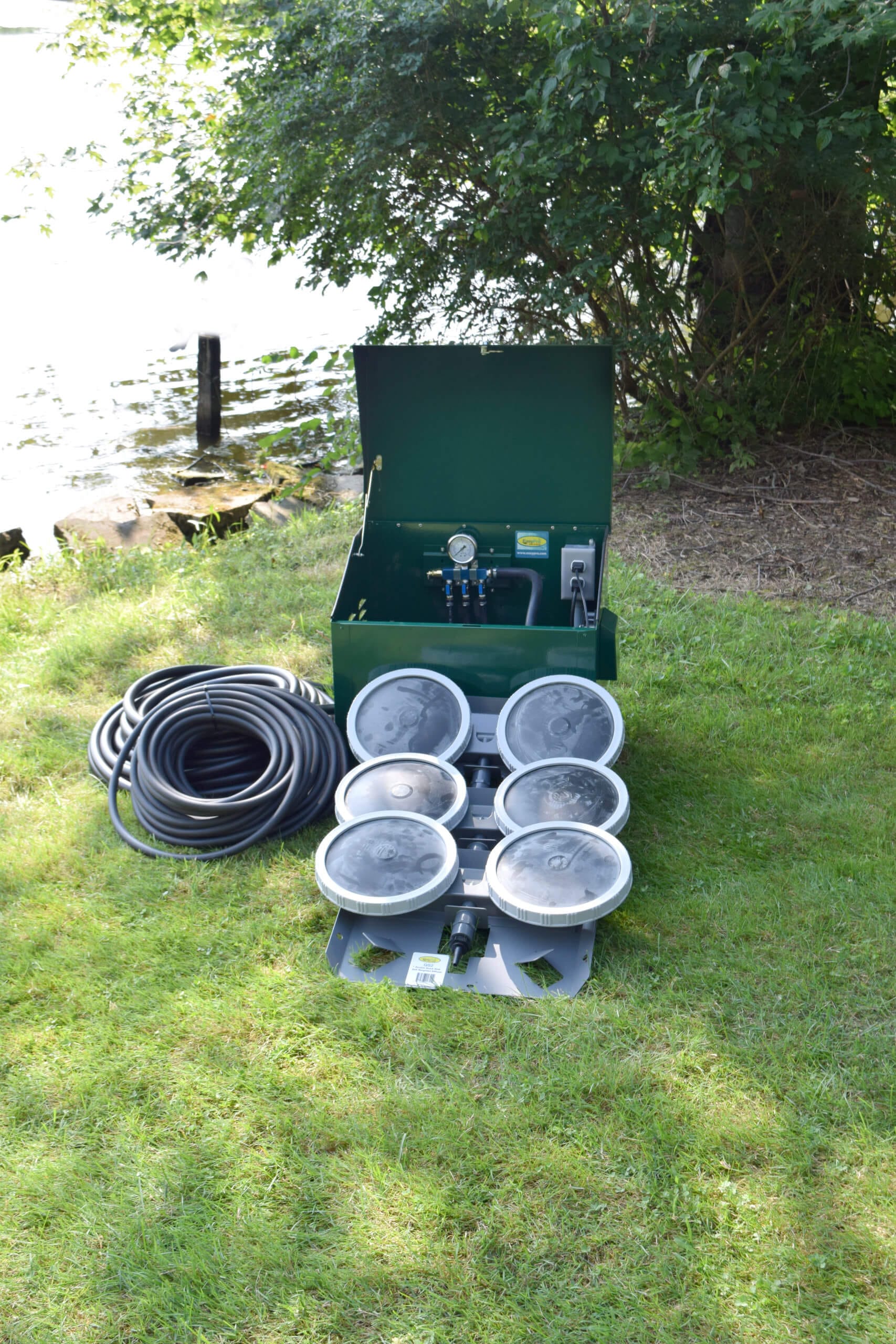
Complete systems include 300ft of 3/8" Quick-Sink weighted tubing — everything you need to install and run the system across a larger or more complex pond layout is in the box. Choose your configuration from the variant selector above.
Smith Creek Field Note | Fish Pond Sizing: "Based on over 30 years of raising fish commercially in New York, oxygen demand in a stocked pond is driven by fish load and water temperature — not just acreage. A heavily stocked 1 acre trout pond in summer can require more aeration than a lightly stocked 3 acre recreational pond. If you are raising fish for production, match your aerator to your stocking density and feeding rate, not just your pond size. The PA66 triple diffuser system gives you the coverage and output to handle serious oxygen demand across the full pond floor."
Is This Fish Pond Aeration System Right for Your Pond?
✅ Best for: Heavily stocked fish ponds | Trout ponds | Catfish ponds | Bass ponds | Any pond with high oxygen demand | Ponds up to 3 acres at optimal depth | 115V or 230V
✅ Ideal upgrade from: Any dual diffuser system that is not keeping up with fish oxygen demand
✅ Works year-round: Designed for 24/7 continuous operation — effective for winter de-icing to maintain three gas exchange holes in surface ice
⚠️ Have a standard recreational pond? Our PA65 dual diffuser system may be sufficient
⚠️ Need aeration for an even larger lake? See our larger HP aeration systems for lakes over 3 acres
Not sure if this fish pond aeration system is the right fit? Our team has hatchery experience in New York since 1993 and can help you size your system to your stocking density and oxygen demand. Call (833) 326-5253 or contact us here.
Specifications
| Part # | Compressor | HP | CFM per Diffuser | Total CFM | Diffusers | Max Depth | Coverage |
|---|---|---|---|---|---|---|---|
| PA66 | SRC50 | 1/2 HP | 1.5 | 4.5 | 3x QS2 | 50 ft | Up to 3 acres |
| Depth Range | Recommended Coverage |
|---|---|
| 5–8 ft deep | Up to 3/4 acre |
| 8–12 ft deep | Up to 1.5 acres |
| 12–16 ft deep | Up to 3 acres |
What's Included
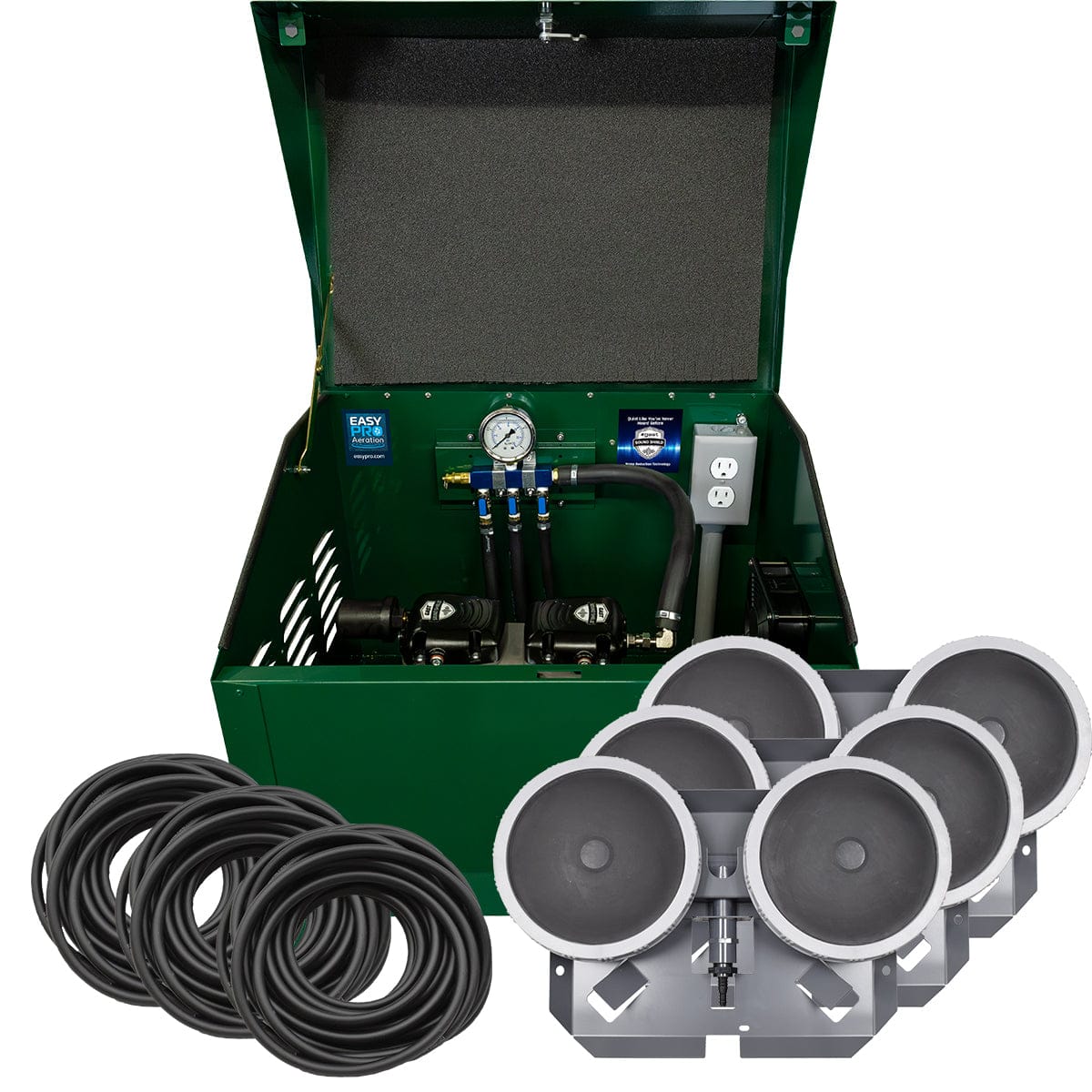
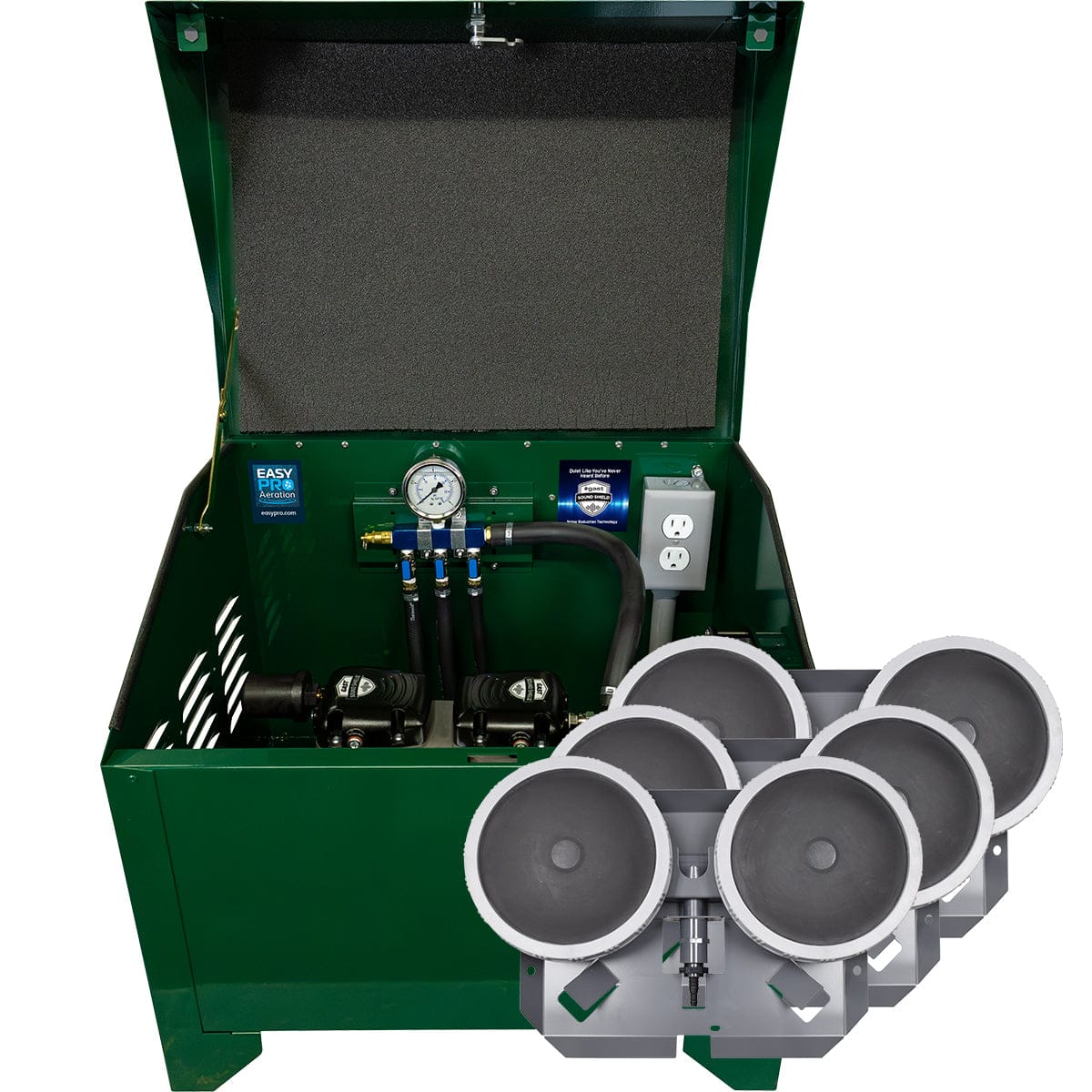
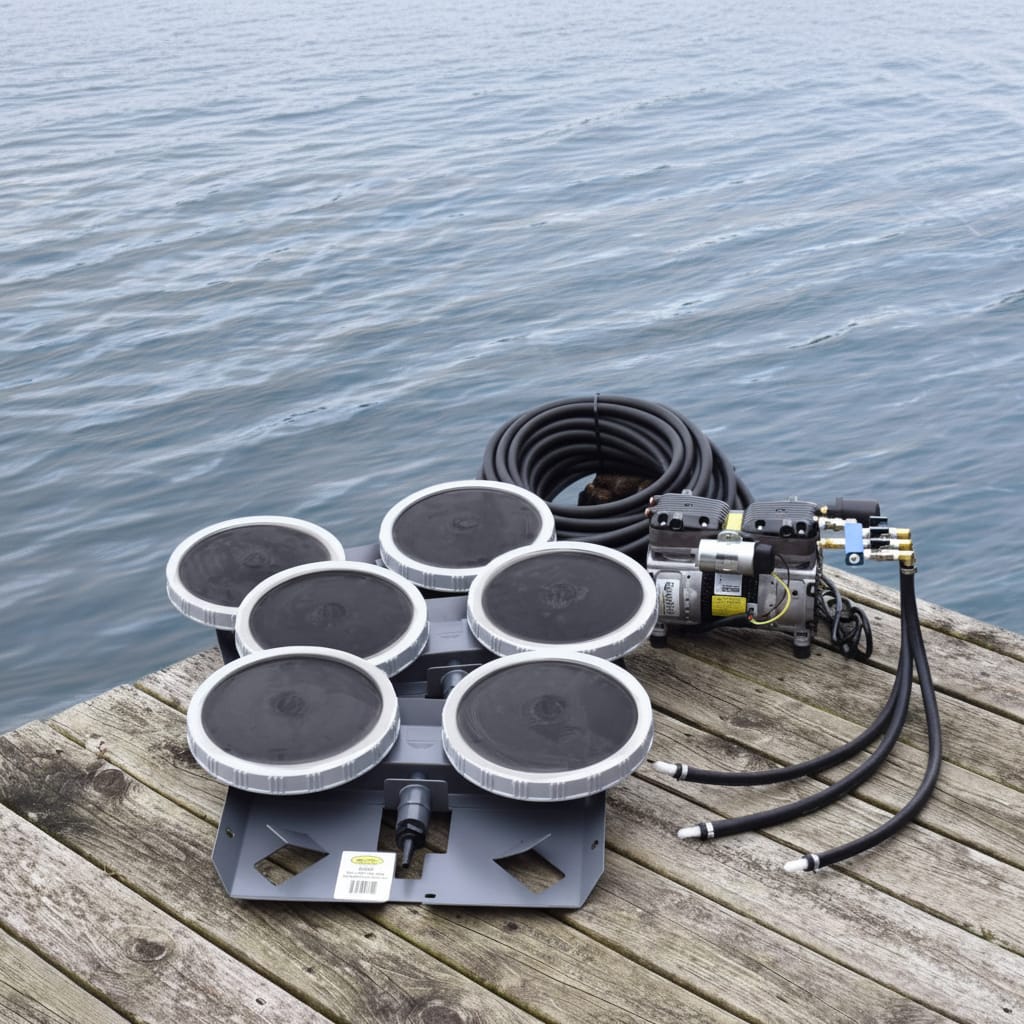
- EasyPro SRC50 1/2 HP rocking piston compressor — oil-free, 24/7 rated (SRC50S with Sound Shield in cabinet variants)
- Triple outlet three-way valve assembly pre-configured on compressor — independent control for each of three diffuser lines with built-in pressure relief valve
- Three QS2 Quick Sink self-weighted dual head membrane diffusers — 1.5 CFM per diffuser (included with PA66W, PA66DP, PA66D, PA66A, PA66ADP, PA66AD variants)
- 300ft of 3/8" Quick-Sink weighted tubing (included with PA66W, PA66DP, PA66D, PA66WLD, PA66DPLD, PA66DLD, PA66ADLD variants)
- Air filter (GAF2) — protects compressor from debris
- All fittings and clamps for connection
- Cabinet variants include lockable soundproof steel cabinet with Sound Shield noise dampening, cooling fan, and pre-wired electrical outlet
Cabinet or No Cabinet — Which Should I Choose?
No Cabinet: Includes the compressor and selected components. The compressor must be protected from weather — place it in an existing shed, outbuilding, or enclosure near the pond. Ideal if you already have a sheltered location available.
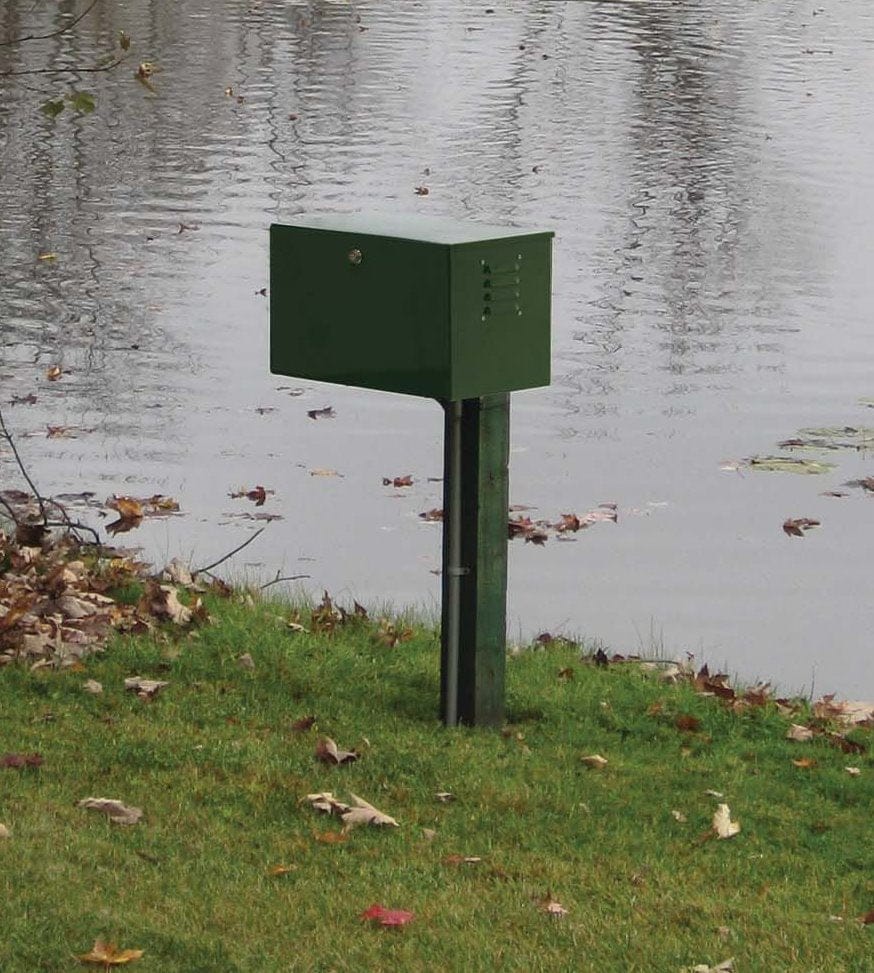
Post Mount Soundproof Cabinet (SC18): The SRC50S compressor ships pre-mounted in a compact soundproof lockable steel cabinet with Sound Shield noise dampening, cooling fan, and pre-wired electrical outlet. Can be mounted to a 4x4 post or placed on the ground — ideal where flexibility in placement is needed or where keeping the unit elevated off the ground is preferred.
Ground Mount Soundproof Cabinet (SC22): The same soundproof lockable cabinet with Sound Shield in a larger footprint that sits directly on the ground. More internal space for easier maintenance access. Ideal for flat stable surfaces near the pond edge.
Why Three Diffusers Make the Difference for Fish Ponds
Fish consume oxygen continuously — and in warm water, at high stocking densities, or during feeding, that demand can exceed what a single or dual diffuser system can supply. Overnight oxygen crashes in fish ponds happen not because the pond is too large but because oxygen demand spikes faster than a two-point aeration system can replenish it.
This fish pond aeration system places three independent circulation columns across the pond floor. Each QS2 diffuser creates a lift zone that pulls oxygen-depleted bottom water toward the surface while delivering fresh air at the sediment level — where fish waste, uneaten feed, and organic matter accumulate and consume the most oxygen. Three diffusers positioned strategically across the pond floor eliminate the dead zones between two-point systems and maintain more uniform dissolved oxygen levels across the entire water body.
Running at 3.6 amps on 115V, this fish pond aeration system costs roughly $0.86 per day — approximately $26 per month to run continuously — a fraction of the cost of a single fish kill event.
Pair With MuckBiotics and Beneficial Bacteria for Maximum Results
Fish ponds accumulate muck faster than recreational ponds — uneaten feed, fish waste, and organic debris build up at the pond bottom and consume oxygen year-round. Pairing this fish pond aeration system with Naturalake MuckBiotics delivers concentrated probiotic bacteria directly to the sediment layer where this buildup occurs. The triple diffuser oxygen output gives these bacteria the sustained aerobic environment they need to work through heavy fish pond organic loads effectively.
For overall water quality and algae prevention throughout the season add our pond beneficial bacteria treatments to your management program. For cold weather months switch to MuckBiotics Zero — engineered to work in water temperatures as low as 34°F to keep muck digestion active through winter.
Frequently Asked Questions
What is the best aeration system for a fish pond?
The best fish pond aeration system delivers bottom-up diffused aeration with enough CFM output to maintain dissolved oxygen above 5 mg/L throughout the water column even during peak demand periods — warm summer nights, feeding time, and high stocking density conditions. The PA66 triple diffuser system delivers 4.5 CFM across three diffuser locations, providing the coverage and output needed for seriously stocked fish ponds up to 3 acres. For lighter fish loads a dual diffuser system may be sufficient — see our PA65 large pond aerator.
How much aeration does a fish pond need?
A fish pond needs enough aeration to maintain dissolved oxygen above 5 mg/L at all times — with a safety margin above that for peak demand periods. As a general rule plan for at least 1.5–2.0 CFM per acre of surface area at optimal depth with additional capacity for high stocking densities. The PA66 delivers 4.5 CFM total across three diffusers — sufficient for ponds up to 3 acres at 12–16 ft deep with moderate to heavy fish loads.
Where should I place three diffusers in my fish pond?
For a fish pond place diffusers at the three deepest points of the pond — typically spaced evenly across the pond floor to create three overlapping circulation columns that together cover the full water body. In a rectangular pond space them in thirds along the longest axis. In an irregular pond place them at the three areas of greatest depth or where fish congregate most heavily. The goal is to eliminate any area of the pond floor where oxygen-depleted water can accumulate.
Can I run a fish pond aeration system in winter?
Yes — and for fish ponds winter aeration is critical. Move all three diffusers to half your maximum depth during freezing temperatures. This maintains warmer water pockets near the bottom for overwintering fish while keeping three gas exchange holes open in the ice above. Never shut the system off mid-winter once ice has formed — the sudden change in water movement can cause ice to shift and damage tubing.
How much does it cost to run this fish pond aeration system per month?
At 3.6 amps on 115V the SRC50 compressor draws approximately 414 watts at 10 feet operating depth. Running continuously at $0.09 per kWh that works out to $0.86 per day — approximately $26 per month. This is the same operating cost as the PA65 dual diffuser system — the triple diffuser configuration adds no additional electricity cost.
What is the difference between the PA65 and PA66 for a fish pond?
Both use the same SRC50 1/2 HP compressor but distribute the airflow differently. The PA65 splits output between two QS2 diffusers at 2.2 CFM each. The PA66 splits output between three QS2 diffusers at 1.5 CFM each — covering more pond floor area with three circulation columns rather than two. For fish ponds the three-point coverage of the PA66 eliminates more dead zones and provides more uniform dissolved oxygen across the full pond bottom where fish waste and uneaten feed accumulate.
What is the difference between the post mount and ground mount soundproof cabinet?
The post mount cabinet (SC18) is compact, includes hardware for either post mounting or ground placement, and houses the SRC50S compressor with Sound Shield noise dampening. The ground mount cabinet (SC22) is larger, sits directly on the ground, and provides more internal space for easier maintenance access. Both include Sound Shield noise dampening, a cooling fan, a lockable door, and a pre-wired electrical outlet.
Will this fish pond aeration system help prevent fish kills?
Yes — oxygen depletion is the leading cause of fish kills in stocked ponds and this fish pond aeration system is specifically designed to prevent it. By maintaining continuous bottom-up oxygenation across three diffuser locations the PA66 keeps dissolved oxygen levels stable even during the highest-risk periods — hot summer nights, spring turnover, and periods of heavy feeding or algae die-off. For ponds that have experienced fish kills also consider beneficial bacteria treatments to reduce the organic load driving oxygen demand.
Is there electricity in the water with this system?
No — the compressor sits on shore and only air travels through the tubing to the diffusers. There is no electricity in the water at any point making this system completely safe for fish and people.
What warranty comes with the EasyPro PA66 fish pond aeration system?
2-year warranty on the compressor. 5-year warranty on tubing, diffusers, and cabinets.
Seasonal Operating Guide
Spring
Restart or continue running your fish pond aeration system as ice melts — typically March through April. Spring turnover is especially dangerous in fish ponds because the mixing of oxygen-depleted bottom water with surface water can cause rapid dissolved oxygen crashes. The three-diffuser coverage of the PA66 provides faster full-pond circulation through spring turnover than a dual diffuser system — protecting your fish stock during this high-risk transition period.
Summer
Summer is the highest risk season for fish pond oxygen depletion. Warm water holds less dissolved oxygen while fish metabolism and feeding increase oxygen demand simultaneously. Run this fish pond aeration system continuously through June, July, and August — 24 hours a day without interruption. Fish gasping at the surface in early morning is the first sign of overnight oxygen depletion. In heavily stocked ponds this can progress to a full fish kill within hours — do not ignore the warning signs.
Fall
Keep all three diffusers running as water temperatures drop and organic debris accumulates across the pond floor. Fish ponds accumulate significantly more organic matter than recreational ponds — uneaten feed, fish waste, and leaf fall all contribute to bottom oxygen demand. This is the ideal time to apply MuckBiotics to digest the fall organic load before it freezes in place and creates oxygen demand problems all winter.
Winter
Move all three diffusers from the deepest points to approximately half your maximum depth. This creates three convection currents that maintain pockets of warmer water for overwintering fish near the bottom while keeping three holes open in surface ice for gas exchange. Never shut the system off mid-winter once ice has formed — the sudden change in water movement can cause ice to shift and damage tubing.
Smith Creek Field Note | Winter Fish Pond Management: "For stocked fish ponds in winter we recommend keeping the system running rather than using a timer. Fish oxygen demand does not stop in winter — it slows, but a fully stocked pond still requires active gas exchange to prevent toxic gas buildup under ice. Move diffusers to 3–4 feet depth and let the system run. The cost is minimal compared to losing a winter's worth of fish growth."
Installation Overview
The EasyPro PA66 fish pond aeration system installs in under two hours with no special tools required. Place the compressor or cabinet within reach of a GFCI-protected 115V or 230V outdoor outlet. Connect tubing from each of the three outlets on the triple manifold to its respective diffuser location — run tubing to the three deepest points or the three most oxygen-critical zones of your pond and allow the weighted diffusers to sink to the bottom on their own.
Smith Creek Field Note | Safe Start-Up Protocol: "If you are installing this system into an existing stagnant fish pond during warm weather do not run it 24/7 immediately. Rapidly mixing stagnant bottom water — which in a fish pond can be severely oxygen-depleted — can cause an immediate turnover event and fish kill. We recommend an acclimation period — run the system for 30 minutes the first day, 1 hour the second, and double the runtime each day until you reach a full 24-hour cycle. Monitor your fish closely during this transition."
Plan your tubing lengths before installation — for ponds up to 3 acres you will typically need 100 feet per diffuser run as a starting point with the included 300ft covering most standard configurations. Additional tubing is available in our tubing collection. At our own facility we run compressors over significant distances with no loss in performance.
Need a larger system? Browse our full pond and lake aeration systems or see our diffused aerators for all pond sizes. Need professional installation or a full pond assessment? Our team offers local pond aeration services across Western New York.Payment & Security
Your payment information is processed securely. We do not store credit card details nor have access to your credit card information.